All news
Politics
Business
Technology
Incidents
Sports
Weather
Science
Entertainment
World
Real Estate
AI News
Study suggests working from home can be bad for your healthPhoto by StartupStockPhotos on Pexels
Science
Education

Study suggests working from home can be bad for your health

extra15 September 2026 at 17:28

A Finnish study suggests that working from home can be harmful to health by making people more sedentary. The research, conducted by the University of Turku, monitored 97 hybrid employees from the university itself for an entire week using sensors attached to their thighs to record their movements.

The results, published in the International Journal of Behavioral Nutrition and Physical Activity, revealed that on days when they worked remotely, participants sat 44 minutes more and exercised 58 minutes less compared to in-office days.

The study found that the time volunteers typically spent standing and cycling, probably during their commute to work, was replaced by sedentary behavior and additional time in bed.

The Finnish researchers concluded that although remote work offers more comfort, it can have negative health consequences for hybrid workers, who lose the physical activity normally associated with the daily commute.


Why this matters

The study shows that remote work, although comfortable, can have negative health impacts by increasing sedentary behavior, relevant information for hybrid workers seeking to balance flexibility and well-being. The Finnish research offers concrete data on behavioral changes between office and home, allowing for more informed decisions about work routines.

About this summary

This is our short summary of a report published by extra on 15 September 2026 at 17:28; the full text stays with the publisher. In our feed it sits under Science. We currently carry 4718 items in that section.

All items in this section →
Source

Related articles

Alentejo é a região onde menos se consomem medicamentos não prescritos
Science

Alentejo is the region with the lowest consumption of non-prescribed medications

In 2025, Alentejo was the region of the country with the lowest proportion of population aged 15 or over declaring the consumption of non-prescribed medications in the two weeks prior to the interview, according to data released by the National Statistics Institute (INE). According to the results of the National Health Survey, this region presents a pattern of over-the-counter medication consumption significantly lower than other areas of the country.

SAPO Notícias15/09/26, 18:37
Descoberto fragmento da "Odisseia" de Homero com cerca de 1 700 anos na Biblioteca de Utrecht
Science

Homer's "Odyssey" Fragment of Approximately 1,700 Years Discovered at Utrecht Library

A fragment of approximately 1,700 years of the epic poem "Odyssey", by Homer, was discovered at the Library of the University of Utrecht, in the Netherlands. The manuscript, dated between the 3rd and 4th centuries, contains verses from Book XII of the work. The discovery represents a rare find for the history of classical literature and the preservation of ancient texts.

Correio da Manhã15/09/26, 18:34
Science

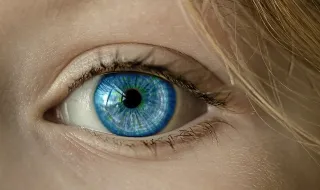
Structured blepharoplasty treats the gaze comprehensively

Structured blepharoplasty is revolutionizing eyelid aesthetic surgery by treating the eye region as a dynamic and interconnected system, rather than just removing tissue. With more than 2 million procedures performed annually worldwide, according to ISAPS, this new approach analyzes the set of structures in the eye region before defining what should be removed, preserved, or repositioned, representing a significant conceptual evolution in relation to traditional blepharoplasty.

oglobo15/09/26, 18:19
Primeiro 'diplodocus' da Europa foi descoberto em Espanha e reforça hipótese dos dinossauros 'atravessarem' o Atlântico
Science

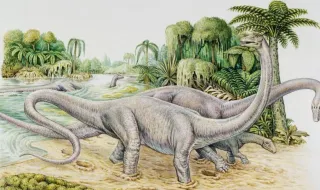
First 'diplodocus' in Europe discovered in Spain reinforces hypothesis of dinosaurs 'crossing' the Atlantic

Spanish paleontologists discovered the first "diplodocus" in Europe in Teruel, a giant herbivorous dinosaur approximately 25 metres long that lived 150 million years ago. The fourteen vertebrae found confirm that these sauropodes reached Europe, reinforcing the theory that dinosaurs managed to cross an Atlantic still forming, when the tectonic plates were separating Laurasia from Gondwana.

Expresso15/09/26, 18:06