All news
Politics
Business
Technology
Incidents
Sports
Weather
Science
Entertainment
World
Real Estate
AI News
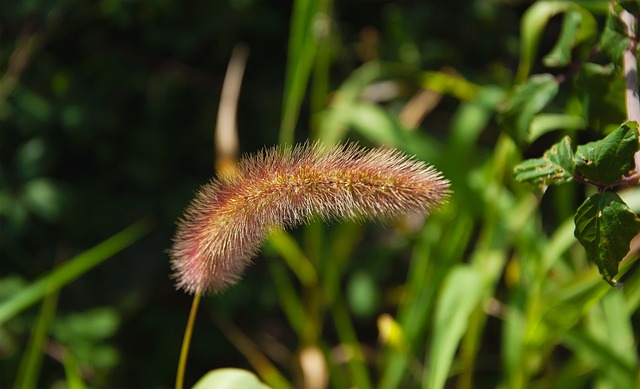
Pampas grass: It is urgent to intervene where this invasive species is still poorly present, warn specialistsPhoto by Πασκαλ on Pexels
Science

Pampas grass: It is urgent to intervene where this invasive species is still poorly present, warn specialists

Wilder15 September 2026 at 14:21

Pampas grass (Cortaderia selloana), a plant native to the Pampas in Argentina and Chile, was used decoratively in gardens and interiors for decades, which contributed to its silent dispersal across Portugal. Currently, despite being on the National Invasive Species List since 2019, it is recorded in 208 of Portugal's 278 municipalities, making it one of the ten most widely distributed invasive plants in the country.

Hélia Marchante, a professor at the School of Agriculture of the Polytechnic University of Coimbra and partner of the LIFE COOP Cortaderia project (2023-2028), warns that "we are not facing a future threat" but rather an invasion already established and advancing rapidly. The plant affects both disturbed environments and natural habitats of high conservation value, including dunes, estuaries, riverbanks, and grasslands. When it forms dense patches, it reduces the space, light, and resources available to native plant species, also harming the animals that depend on them and human health, being considered an allergen.

The country's interior, from north to south, has lower presence of pampas grass, with the invasion mainly concentrated on the coast and peri-urban areas of the North and Centre. It is precisely in these locations with lower presence that specialists consider intervention urgent, as with fewer resources isolated plants can be eliminated more successfully and future invasions prevented. Currently in bloom, each female plant produces millions of wind-dispersed seeds, allowing accelerated expansion. Since 2023, there has been a proposal for a National Action Plan for the control of the species, submitted to the Institute for Nature Conservation and Forests,


Why this matters

Readers in Portugal face an active environmental threat, as pampas grass is progressively invading the national territory, affecting local biodiversity and human health as an allergen. Garden and land owners may be fined for maintaining the plant, and everyone is called upon to participate in identifying and removing the species to stop its expansion, especially in inland areas where intervention is still more effective and less costly.

About this summary

This is our short summary of a report published by Wilder on 15 September 2026 at 14:21; the full text stays with the publisher. In our feed it sits under Science. We currently carry 4691 items in that section.

All items in this section →
Source

Related articles

Um terço da população maior de 15 anos consumiu medicamentos sem receita em 2025
Science

One third of the population over 15 years old consumed medications without prescription in 2025

One third of the Portuguese population over 15 years old consumed medications without a medical prescription in 2025, according to data from a study. The most significant consumption of over-the-counter medications was recorded in the age group of 15 to 34 years, which showed a higher prevalence compared to prescribed medications. The study warns about the risks associated with self-medication without professional health supervision.

Correio da Manhã15/09/26, 14:40
Science

A country has surpassed the barrier of 100,000 centenarians

A country has surpassed the barrier of 100,000 centenarians, with almost 90% of people over 100 years old being women, revealing significant population aging and a pronounced gender disparity in longevity.

CNN Portugal15/09/26, 14:32
Science

Professor alerts to the impact of screens on child development

A university professor alerted to the negative impact of screen time on child development, arguing that there is a direct link between the reduction of play experiences in the first years of life and the low levels of physical activity recorded in adolescence. The specialist emphasized the importance of limiting the use of electronic devices in young children to promote healthy development.

Diário de Aveiro15/09/26, 14:30
Science

Mpox transmission in Portugal intensifies since 2025 but cases have decreased in the last two weeks

The Directorate General of Health clarified that between January and August 2026, 282 cases of mpox were confirmed in Portugal, with intensification of transmission from late May, especially in June and July. However, in the last two weeks a decrease in the number of cases was observed.

RTP Notícias15/09/26, 14:10