All news
Politics
Business
Technology
Incidents
Sports
Weather
Science
Entertainment
World
Real Estate
AI News
Neuroprosthesis for paralysis allows patients to communicate words and gestures
Science

Neuroprosthesis for paralysis allows patients to communicate words and gestures

SIC Notícias15 September 2026 at 06:30

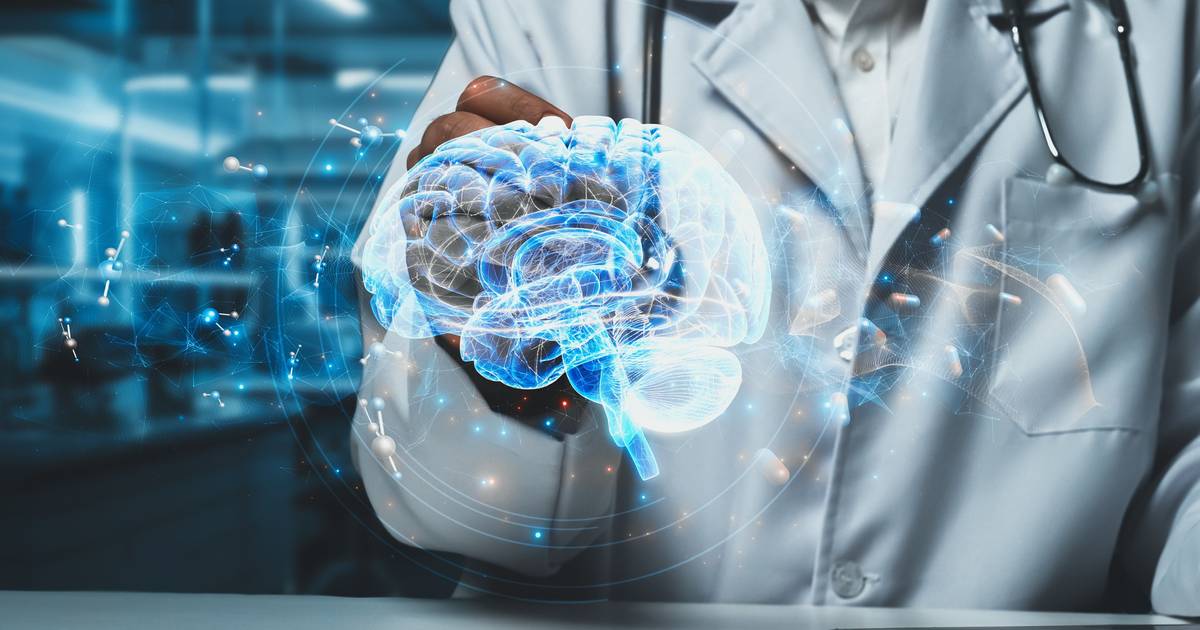
A neuroprosthesis developed for people with paralysis allows communication through words and gestures, representing a significant advance in the field of brain-computer interfaces.

The findings were published in the prestigious journal Nature Neuroscience, giving scientific credibility to the results obtained by the researchers.

This technology is intended primarily for people who have suffered strokes or who are affected by neurodegenerative diseases, conditions that frequently result in severe communication difficulties.

The system allows translating brain signals into oral and gestural communication, opening new possibilities for the quality of life of these patients.


Why this matters

This technology represents a concrete hope for people with paralysis, allowing them to regain the ability to communicate through words and gestures. The scientific advance can transform the quality of life of these patients and open the way for new clinical applications of brain-computer interfaces.

About this summary

This is our short summary of a report published by SIC Notícias on 15 September 2026 at 06:30; the full text stays with the publisher. In our feed it sits under Science. We currently carry 4635 items in that section.

All items in this section →
Source

Related articles

Science

Why do we continue to ignore migraine?

Migraine continues to be ignored in Portugal, despite affecting about two million Portuguese people, hiding behind an image of a common complaint that minimizes its real severity.

Diário de Viseu15/09/26, 07:45
Science

Rodrigo Martins: "You cannot do science if you have to be thinking about the rent"

Electrical engineer Rodrigo Martins, retiring after a career dedicated to research and higher education in Portugal, takes the occasion to reflect on his professional journey and issue a warning about the current state of Portuguese science. In an interview coinciding with his retirement day, Martins highlights the economic difficulties faced by researchers, stating that "you cannot do science if you have to be thinking about the rent," evidencing the tension between scientific vocation and the material conditions of researchers in Portugal.

Público15/09/26, 07:24
A Lua tem água — mas não chega para sustentar cidades
Science

The Moon has water — but not enough to sustain cities

Scientists Martin Elvis and Jonathan McDowell published a study in Frontiers in Space Technologies calculating that, although the Moon may contain up to one billion tonnes of water at its poles, this amount would be insufficient to sustain a city of one million people for more than a century, even with the most generous estimates of available water and recycling efficiency. The discovery of lunar water has fueled speculation about the possibility of building cities and industrial districts on the Moon, but the researchers warn that water resources are more limited than previously thought.

ZAP Notícias15/09/26, 07:20
Science

What happens to your body when you masturbate too frequently?

Masturbation is a healthy sexual behavior that anyone can practice, allowing for personal sexual mapping and guiding partnerships. The act triggers a complete sexual cycle through a neurochemical cocktail that includes oxytocin, prolactin, serotonin, and dopamine, favoring the nervous and endocrine systems and reducing stress. Despite existing cultural prejudices, the short-term benefits are undeniable.

oglobo15/09/26, 07:00