All news
Politics
Business
Technology
Incidents
Sports
Weather
Science
Entertainment
World
Real Estate
AI News
ESA warns of growing risk of ground accidents with space debris
Science

ESA warns of growing risk of ground accidents with space debris

Correio da Manhã14 September 2026 at 18:45

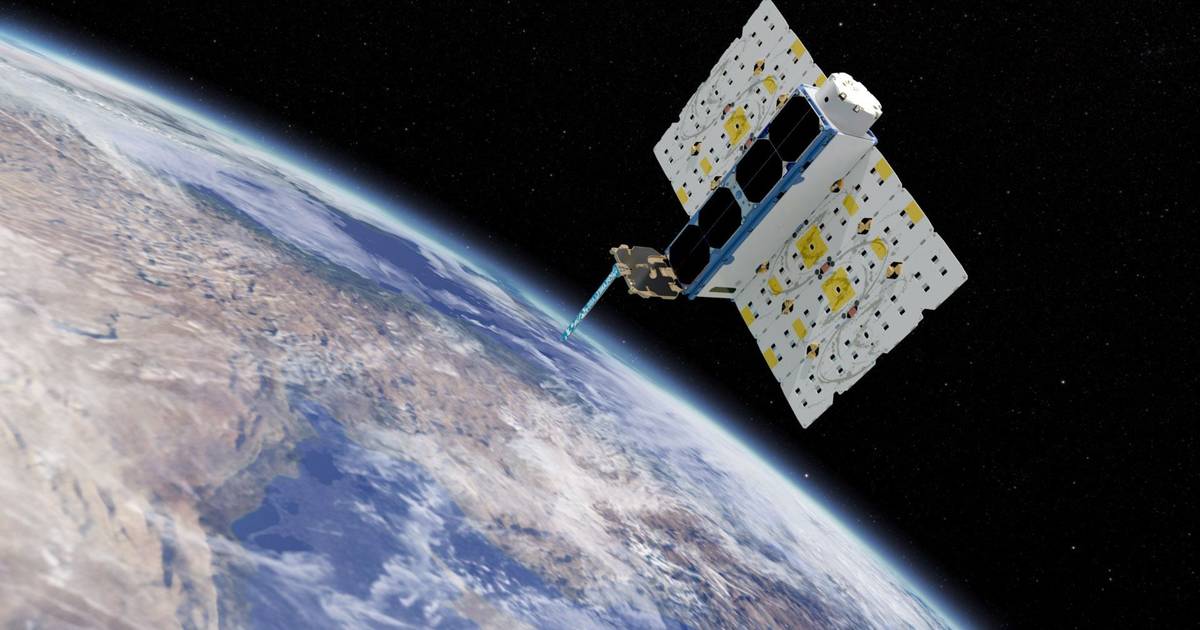
The European Space Agency (ESA) issued a warning about the growing risk of ground accidents caused by space debris. A report from the agency points to increasing insecurity and the possibility of certain regions becoming unusable due to the increase in space junk.

This phenomenon is directly linked to the collision and fragmentation of objects in orbit, which has been intensifying in recent years. These events generate an increasing amount of fragments and debris that remain circulating around Earth.

The concern of space authorities is that, with the accumulation of these materials, the risk of pieces falling on the Earth's surface increases significantly. Some areas of the planet may become unviable for certain human activities if the problem is not adequately addressed.

The ESA report serves as a warning about the urgent need for policies and measures to deal with the space debris problem before the effects become irreversible.
Why this matters

The ESA report highlights that the increase in space debris represents a real threat to terrestrial safety, and may affect specific areas that would become impractical. This warning is relevant to anyone living in regions under orbital debris fall trajectories.

About this summary

This is our short summary of a report published by Correio da Manhã on 14 September 2026 at 18:45; the full text stays with the publisher. In our feed it sits under Science. We currently carry 4609 items in that section.

All items in this section →
Source

Related articles

ESA alerta para risco crescente de acidentes causados por fragmentos de objetos espaciais
Science

ESA alerts to the growing risk of accidents caused by fragments of space objects

The European Space Agency issued a report warning about the growing risk of accidents caused by fragments of space objects that survive atmospheric reentry. The document also highlights that the exponential increase in space debris and the continuous cycle of collisions between objects in orbit can lead to the inactivation of entire orbital regions, representing a significant threat for future space missions and for the security of active satellites.

SIC Notícias14/09/26, 19:50
Science

The antibodies that cross the placenta: how the mother's vaccine protects the baby even before birth

The article explains how maternal antibodies cross the placenta to protect the baby even before birth, describing the immunity transfer process. It details that each vaccine recommended during pregnancy has a specific time window for application throughout the gestation period, and that this specificity is not mere bureaucracy, but rather based on scientific criteria on when antibody transfer is most effective to ensure newborn protection.

BBC News Brasil14/09/26, 19:35
Science

Macaronight 2026 brings UMa science to Largo do Colégio

The University of Madeira promotes on September 25th, between 3pm and 9:30pm, at Largo do Colégio, in Funchal, Macaronight 2026 – European Researchers' Night. The event, open to the public and free entry, aims to bring science and research closer to society, providing direct contact with the institution's researchers.

Funchal Notícias14/09/26, 19:26
Investigação da FCUP desenvolve enzima devoradora de plástico
Science

FCUP research develops plastic-devouring enzyme

Research co-led by researcher Pedro Paiva from the Faculty of Sciences of the University of Porto (FCUP) has developed a new enzyme capable of degrading polyurethane, a plastic material widely used in footwear foams and sportswear. This discovery promises to revolutionize the recycling of textile and footwear waste, contributing to the reduction of environmental pollution caused by these hard-to-degrade materials.

SAPO Notícias14/09/26, 19:18