All news
Politics
Business
Technology
Incidents
Sports
Weather
Science
Entertainment
World
Real Estate
AI News
How to live to 110: The immune secret of supercentenarians | By Isabel DuartePhoto by PublicDomainPictures on Pexels
Science

How to live to 110: The immune secret of supercentenarians | By Isabel Duarte

Postal do Algarve14 September 2026 at 15:20

Japanese researchers discovered a few years ago that people over 110 years old have an unusual amount of cytotoxic CD4 T lymphocytes, a rare type of immune cell that, in addition to coordinating other defense cells, can directly kill dangerous cells in the body. A new study published in the journal Cell Reports, led by Hashimoto and colleagues, attempted to understand how these cells appear during aging, analyzing 28 participants from different age groups.

The results reveal a significant change: between 70 and 99 years of age, these cells represented only 4% of T lymphocytes on average. Among centenarians between 100 and 109 years of age, the proportion rose to 9.6%, and in supercentenarians aged 110 or older it reached 17.6%, more than four times the value of the younger group. Furthermore, many of these cells were copies or clones of each other, with the most abundant clone representing on average one third of all cytotoxic CD4 T lymphocytes.

The researchers raise the hypothesis that these cells may be fighting cancer cells, since some of their genetic characteristics are similar to those of T cells that expand within tumors, especially in lung cancer. However, the study did not directly demonstrate that these cells are killing cancer cells, and their true targets are still not known with certainty.

The article concludes that, although aging is often described as a story of loss, supercentenarians may represent an example of how the body continues to grow and adapt. Perhaps reaching 110 years does not depend only on preserving the defenses of youth, but also on the capacity to build new defenses against problems that only arise after a century of life.


Why this matters

This study is of interest to readers in Portugal because it reveals that aging may not be just a story of loss, but also of adaptation and building new defenses by the body. The research suggests that reaching 110 years may depend on the capacity to develop new immune responses against problems that arise with an exceptionally long life, which opens doors for future medical applications in combating aging and cancer.

About this summary

This is our short summary of a report published by Postal do Algarve on 14 September 2026 at 15:20; the full text stays with the publisher. In our feed it sits under Science. We currently carry 4591 items in that section.

All items in this section →
Source

Related articles

Science

Atopic dermatitis can affect children's sleep, concentration and school performance

Atopic dermatitis affects about 10% of children in Portugal and can have consequences that go far beyond visible skin lesions, including sleep disturbances, concentration difficulties and negative impact on school performance, according to specialists.

Notícias de Coimbra14/09/26, 16:37
'Heróis da Fruta' motivaram mais de 68% alunos da Madeira a provar novos hortofrutícolas
Science

'Fruit Heroes' motivated over 68% of Madeira students to try new fruit and vegetables

More than two-thirds of Madeira students who participated in the "Fruit Heroes" programme tried a fruit or vegetable for the first time that they had never tried before. The result of 68.4% comes from monitoring carried out by the Institute of Environmental Health of the Faculty of Medicine of the University of Lisbon, in partnership with the Portuguese Association Against Childhood Obesity, during the 2024/2025 school year.

dnoticias.pt14/09/26, 16:26
Science

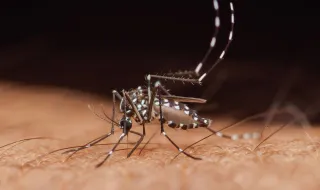
Mosquito that transmits dengue detected in Castelo Branco

A mosquito that transmits the dengue virus was detected in the district of Castelo Branco, although no mosquitoes carrying the virus have yet been identified. The Local Health Unit (ULS) has implemented an enhanced response and monitoring plan for the mosquito, calling on the population's collaboration to help with surveillance and prevention.

Observador14/09/26, 16:21
ULS de Castelo Branco alerta população para mosquito transmissor do dengue, zika e chikungunya
Science

ULS of Castelo Branco alerts population to mosquito transmitting dengue, zika and chikungunya

The Local Health Unit of Castelo Branco alerted the population to the risks associated with the mosquito that transmits diseases such as dengue, zika and chikungunya, emphasizing the importance of prevention and surveillance measures.

SIC Notícias14/09/26, 16:10