All news
Politics
Business
Technology
Incidents
Sports
Weather
Science
Entertainment
World
Real Estate
AI News
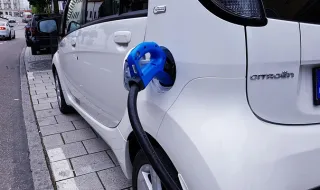
Oil above 108 dollars after Saudi Arabia pipeline closurePhoto by mdherren on Pexels
Business
Energy

Oil above 108 dollars after Saudi Arabia pipeline closure

Público14 September 2026 at 11:26

Oil prices exceeded 108 dollars following the closure of a pipeline in Saudi Arabia. This significant increase in crude prices occurred in a context of escalating tensions in the region.

The situation in the Middle East remains tense, which has contributed to instability in global energy markets. The closure of the Saudi pipeline further aggravated concerns about oil supply.

European stock markets opened the session lower, reflecting investor nervousness in the face of geopolitical uncertainty. Volatility in the Middle East region has been affecting market confidence.

At the same time, sovereign debt interest rates are rising, suggesting an increase in perceived risk by investors. This combination of factors is creating additional pressure on the European economy.

Why this matters

Readers in this region face potential increases in fuel and essential goods prices, given that the region is affected by Middle East instability and its repercussions on European markets. The closure of the Saudi pipeline represents an additional factor of economic uncertainty in a context already marked by geopolitical tensions. WHY: Readers in this region face potential increases in fuel prices, given that the region is affected by Middle East instability and its repercussions on European markets. The closure of the Saudi pipeline represents an additional factor of economic uncertainty.

About this summary

This is our short summary of a report published by Público on 14 September 2026 at 11:26; the full text stays with the publisher. In our feed it sits under Business. We currently carry 22539 items in that section.

All items in this section →
Source

Related articles

Business

Portugal is among the countries "most advanced in electric vehicle adoption", report indicates

Portugal is among the world's most advanced markets in electric vehicle adoption, ranking 7th among 34 countries analyzed in the Roland Berger consultancy's EV Charging Index 2026 report. The study reveals that electric vehicle sales grew more than 20% in the last year, exceeding 21 million units, and that the global fleet of electric vehicles has already exceeded 73 million. China leads with a 50% penetration rate in new electric vehicle sales, accounting for about nine out of ten sales in the Asia-Pacific region. According to Roland Berger, the main challenge to sustaining market growth lies in expanding fast and ultra-fast charging infrastructure.

Jornal Económico14/09/26, 14:05
Business

Space company Open Cosmos raises 300 million euros to expand satellite production

Open Cosmos, a British-Portuguese space company, raised 300 million euros in a funding round led by European investors, including Lightrock, ETF Partners, and Portuguese funds such as Iberis Capital and Shilling VC. The funds will be used to expand satellite manufacturing capacity and accelerate three platforms: ConnectedCosmos (secure communications), OpenConstellation (Earth observation) and DataCosmos (data processing). The company, which employs more than 400 people in facilities in the UK, Portugal, Spain and Greece, positions itself as an alternative for countries seeking sovereign space capabilities without the cost of independent infrastructure.

Jornal Económico14/09/26, 14:00
Business

Diesel: no driver likes this record

Diesel reached its all-time highest value today in Portugal, with a four-cent increase that brought the price per liter to around 2.15 euros. Gasoline, on the other hand, recorded a six-cent drop, but is still above two euros per liter.

TVI Notícias14/09/26, 14:00
Business

Complaining about fuel prices? Now see here the impact on firefighters' fleet

The increase in fuel prices is severely affecting firefighter corps in Portugal, which face high operational costs by traveling thousands of kilometers per day on emergency missions. The example of Bragança illustrates how these expenses consume a large part of humanitarian associations' budgets, compromising their capacity to invest in other needs of the corps.

TVI Notícias14/09/26, 14:00