The Iranian Minister of Foreign Affairs, Abbas Araghchi, announced that the recently reached agreement with Oman does not mean that the Strait of Hormuz will be reopened. In an interview with the pan-Arab media outlet Al-Araby Al-Jadeed, Araghchi stated that Iran's condition for reopening the strait is that the United States resume compliance with the commitments outlined in the Islamabad Memorandum, signed in June between Tehran and Washington.
The Islamabad Memorandum established the end of hostilities, the lifting of the US naval blockade, the reopening of Hormuz, the lifting of oil sanctions, and the release of frozen assets. On Saturday, the Iranian news agency Tasnim announced an agreement between the two parties on navigation in Hormuz, which will be formally presented on Monday at a meeting in Salalah, Oman.
Monday's meeting will bring together Iran, Oman, Saudi Arabia, Kuwait, Qatar, the United Arab Emirates, and Iraq, without Bahrain's participation. The encounter aims to strengthen security cooperation in the Middle East and is being presented by Iran as the first step toward establishing a regional security framework in the Gulf.
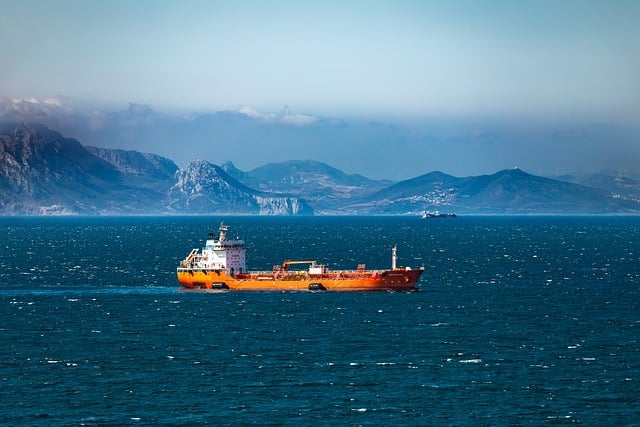
Iran assumed control of the Strait of Hormuz after being attacked on February 28 by the United States and Israel. Through this strait, bounded to the north by the Iranian coast and to the south by the Sultanate of Oman, approximately 20% of the world's oil and liquefied natural gas passed before the war. This situation, which has persisted for six months, continues to drive oil prices, which have again exceeded 100 dollars per barrel.