All news
Politics
Business
Technology
Incidents
Sports
Weather
Science
Entertainment
World
Real Estate
AI News
Artificial Intelligence helps prevent blindness caused by glaucoma
Science
Education
Artificial intelligence
Porto

Artificial Intelligence helps prevent blindness caused by glaucoma

dnoticias.pt13 September 2026 at 02:00

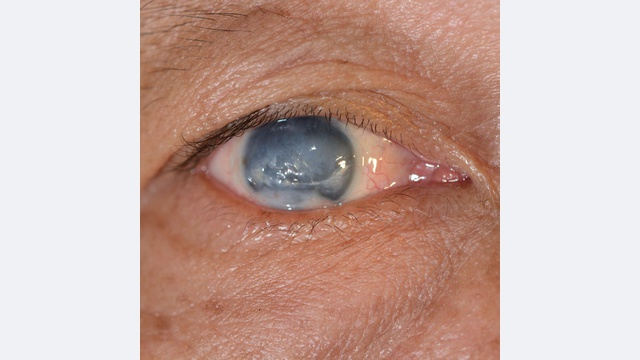
A team of researchers has developed a technology based on Artificial Intelligence for the early detection of glaucoma patients who present the highest risk of vision loss in the future. This research was revealed by the Faculty of Medicine of the University of Porto.

Professor João Barbosa Breda from FMUP, the only Portuguese mentioned in the article, explained that this technology can predict the rate of future progression and the aggressiveness of glaucoma through a simple photograph of the optic nerve obtained in a single consultation.

The main objective of this tool is to help prevent blindness caused by this disease, allowing for more timely interventions in patients identified as being at higher risk.

The article indicates that this approach represents a significant advancement in the diagnosis and monitoring of glaucoma, enabling more personalized and preventive medicine for patients affected by this eye condition.

Why this matters

This innovation allows patients in the region to have a faster and more precise diagnosis of glaucoma in a single consultation, potentially preventing blindness in thousands of people. The technology represents a significant advancement in eye medicine, offering ophthalmologists a tool that can identify the most urgent cases before vision loss becomes irreversible.

About this summary

This is our short summary of a report published by dnoticias.pt on 13 September 2026 at 02:00; the full text stays with the publisher. In our feed it sits under Science, and it concerns Porto. We currently carry 4460 items in that section.

All items in this section →
Source

Related articles

China prepara-se para ir a Marte à procura de vida
Science

China prepares to go to Mars in search of life

China is preparing an ambitious mission to Mars, with launch scheduled for 2028, at a time when Beijing celebrates the 75th anniversary of the People's Republic. The mission, compared to the launch of Sputnik in 1957 by the Chinese space agency, will have as its main objective the collection of Martian samples, looking for traces similar to the first forms of life that existed on Earth. The mission is part of a new global space race and positions China as a leading power in the exploration of the solar system.

Correio da Manhã13/09/26, 01:30
Carlos Fiolhais: “A ciência nunca demonstrará a inexistência de Deus"
Science

Carlos Fiolhais: "Science will never prove the non-existence of God"

Physics professor Carlos Fiolhais, an agnostic, argues that science will never prove the non-existence of God, contending that science and religion are different domains with irreconcilable languages and very different questions. In his view, it makes no sense to look for the divine in equations or in DNA.

Correio da Manhã13/09/26, 01:30
Morreu Filipe Caseiro Alves, referência nacional e internacional da Radiologia
Science

Filipe Caseiro Alves, National and International Reference in Radiology, Has Died

He died at the age of 67, Filipe Caseiro Alves, radiologist, full professor at the Faculty of Medicine of the University of Coimbra and clinical director of Hospital da Luz Coimbra, leaving a career of more than four decades dedicated to Medicine, teaching and research.

SAPO Notícias13/09/26, 00:57
Sépsis: reconhecer cedo, diagnosticar com precisão, agir no momento certo
Science

Sepsis: recognizing early, diagnosing accurately, acting at the right time

The article addresses the critical importance of early sepsis recognition, accurate diagnosis, and timely intervention. It emphasizes that in critical situations, the speed of diagnosis must be accompanied by the quality and relevance of clinical information obtained, highlighting that speed cannot compromise the precision needed to save lives.

SAPO Notícias13/09/26, 00:00