All news
Politics
Business
Technology
Incidents
Sports
Weather
Science
Entertainment
World
Real Estate
AI News
Find out why air quality is compromisedPhoto by DEZALB on Pexels
Science
Climate
Investments
Space

Find out why air quality is compromised

Meteored Portugal12 September 2026 at 12:03

Various scientific studies demonstrate that atmospheric pollutants are extremely harmful to humans and ecosystems. Air pollution causes impacts both on the environment and on health, and can even cause death.

The Annual Air Quality and Climate Bulletin of the World Meteorological Organization explains the negative impacts of aerosols, including fine particulate matter, and tropospheric ozone on human health.

This bulletin, the sixth in the series, is based on satellite observations, atmospheric models, data assimilation products, monitoring networks and a series of articles written by the scientific community that advises the WMO on air quality issues.

The document was released on International Clean Air Day for Blue Skies, 7 September, and provides an overview of the most important aspects of air quality and climate change in 2025, emphasizing the strong links between air quality and climate change.
Why this matters

This article is relevant to readers because it presents updated scientific information on the risks of air pollution, a topic that directly affects public health and the environment. The reference to the WMO Bulletin provides a reliable and credible source on the state of air quality globally, allowing readers to better understand the causes and consequences of atmospheric pollutants in their daily lives.

About this summary

This is our short summary of a report published by Meteored Portugal on 12 September 2026 at 12:03; the full text stays with the publisher. In our feed it sits under Science. We currently carry 4420 items in that section.

All items in this section →
Source

Related articles

Costuma comprar metade de um melão ou melancia? Nutricionista explica porque deve evitar
Science

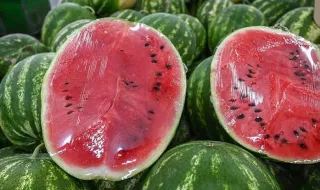
Do you usually buy half a melon or watermelon? Nutritionist explains why you should avoid it

The article addresses the common practice of buying half a melon or watermelon and warns about the associated risks. A nutritionist explains why this practice should be avoided, highlighting the temperature at which cut fruit is kept as an important food safety factor.

SAPO Notícias12/09/26, 12:30
Fecha a tampa antes de puxar o autoclismo? Cientistas explicam por que devia começar a fazê-lo
Science

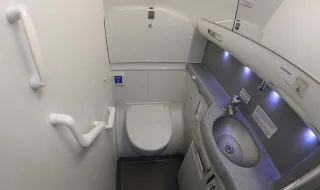
Should you close the lid before flushing the toilet? Scientists explain why you should start doing it

Scientists explain that closing the toilet lid before flushing is an important hygienic practice that helps prevent the spread of aerosols and invisible particles containing bacteria and viruses into the bathroom environment. Studies show that when flushing with the lid open, microdroplets are released into the air and settle on surfaces such as towels, toothbrushes, and handles, potentially contaminating these objects with pathogens. This simple habit change can significantly reduce exposure to disease and is especially recommended in homes with children, elderly people, or immunocompromised individuals.

SAPO Notícias12/09/26, 12:00
Science

Eggs Go Bad Too: "Water Test" Reveals Whether They're Still Safe to Eat

The article explains how to check if eggs are still good to eat, drawing on food safety experts. The "water test," which involves placing the egg in cold water—if it sinks it's fresher, if it floats it's older—is presented as a freshness indicator but not a safety guarantee. Other signs include smell, color, and the consistency of the egg white. The publication warns that raw eggs can carry bacteria such as Salmonella, so they should be avoided in uncooked preparations when there are doubts about storage.

Postal do Algarve12/09/26, 12:00
Mistura de areia, gelatina e levedura pode permitir construir casas em Marte
Science

Mix of sand, gelatin and yeast can allow building houses on Mars

Chinese scientists developed an innovative mixture for 3D printing structures on Mars, combining sand, gelatin and a yeast coated with adhesive proteins. This biocompatible material simulates construction using resources available on the red planet, and can revolutionize how future space missions will build extraterrestrial habitats.

SIC Notícias12/09/26, 12:00