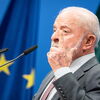
Lula sanctions law that ends tax on international purchases up to 50 dollars
Politics

Lula sanctions law that ends tax on international purchases up to 50 dollars

Correio da Manhã10 September 2026 at 22:48

President Luiz Inácio Lula da Silva sanctioned a law that ends the collection of tax on international purchases of up to 50 dollars. The measure represents a significant change in the taxation of purchases made on foreign websites by Brazilian consumers.

The Law was approved by the National Congress before reaching presidential sanction. The text modifies the previous rules that imposed taxation on these low-value international acquisitions.

The National Industry Confederation (CNI), the entity that represents the Brazilian industrial sector, expressed itself against the measure. According to the entity, the text represents a setback in the country's tax policy.

According to CNI, the elimination of the tax on international purchases of up to 50 dollars expands the inequality between national and foreign companies. The entity argues that the tax benefit granted to international sellers harms the competitiveness of Brazilian industry.

Related articles

Politics

Democrats Violate $5,000 Payment Promise Before Trump and Vance Speeches in Dallas

At the Republican midterm convention in Dallas, President Trump made a surprising and deemed implausible promise to send every American adult a cash dividend of $5,000. Democrats are accused of violating a payment promise before the speeches by Trump and Vance at the event.

Tuugo11/09/26, 00:19
Politics

Are pensions unreformable?

In a context of accelerated population ageing and slow economic growth, reforming the public pension system becomes inevitable. The article explores the challenges faced by social security systems, questioning whether pensions can really be considered irrefutable in the face of current demographic and economic pressures.

Observador11/09/26, 00:14
Politics

Are the Germans becoming fascists again?

An article analyses concerns about a possible fascist turn in Germany, focusing particularly on the eastern part of the country, which was part of the Soviet bloc between 1945 and 1990 and was excluded from the Western cultural transformation that took place in the West from the 1970s onwards, raising questions about the consequences of this historical exclusion for the region's current politics.

Observador11/09/26, 00:11
Politics

New social welfare model in Higher Education: strengthen without excluding

The article analyzes the new Regulation for the Award of Scholarships to Higher Education Students approved by the Portuguese Government in May, which adjusts scholarship amounts to students' economic conditions and regional cost of living. The rector of the University of Aveiro warns that preliminary simulations at the institution indicate that around 20% of scholarship recipients analyzed (15 out of 72 cases) could no longer meet the conditions to receive a scholarship under the new rules. Although recognizing that the phased implementation until 2027/28 is positive, he argues that the reform requires a rigorous assessment of its effects, as the success of a social welfare policy is not measured only by the value of support, but also by the ability to ensure that no one is left behind.

NotíciasdeAveiro.pt11/09/26, 00:06