This is how the back to school has started in Ceuta: police and military guard the schools
World
Военный конфликт
Космос
Vila Real

This is how the back to school has started in Ceuta: police and military guard the schools

El Periódico Mediterráneo - General8 September 2026 at 14:17

The return to school in Ceuta took place this Tuesday, September 8, with a special security operation composed of police and military guarding the city's educational centers. The Spanish Government reported that attendance at classes in the 35 public and state-subsidized primary and secondary schools was close to 70%, while teacher presence was "complete."

Minister for Territorial Policy and Democratic Memory, Ángel Víctor Torres, revealed at the press conference after the Council of Ministers that attendance ranged from 63% in primary education to 83% in secondary education. Torres acknowledged that "the situation is not simple," admitting the logistical and organizational difficulties that reopening schools implies in this context.

The focus was on the reopening of classes after the massive entry of migrants recorded in Ceuta on July 30 and 31. This irregular migratory flow created additional challenges for the organization of the school year in the Spanish autonomous city.

In total, 16,070 students were called back to class this Tuesday in the 35 educational centers of Ceuta, on a day marked by reinforced surveillance and uncertainty caused by the recent migratory events in the city.


Related articles

World

Finnish court accuses captain of Russian cargo ship

A Finnish court is trying the captain and a crew member of a Russian merchant ship, accusing them of aggravated damage and aggravated obstruction. The two accused deny the facts presented by Finnish justice.

Observador08/09/26, 15:34
World

OCDE students worsen at everything, but Reading is the most critical area

The results of the PISA 2025 assessment program reveal a widespread decline in mathematics, reading, and science competencies in OECD countries and beyond, with reading being considered the most critical area, having fallen 28 points in OECD countries between 2015 and 2025. The director of the ifo Education Economics Centre, Ludger Woessmann, warns that the loss of basic competencies represents an average income loss of 3% to 4% in the long term, which could reach 9-10% compared to pre-pandemic levels, with macroeconomic consequences in the billions. OECD Secretary-General Mathias Cormann highlights that more than one in four OECD students now have low performance in all three assessed subjects, and that excessive digitalization and reduced reading for pleasure are contributing factors. The report also warns about the excessive use of digital devices in classrooms and advocates for moderate use of digital tools and artificial intelligence in learning.

Jornal Económico08/09/26, 15:34
La impecable imagen que ha dejado la segunda Entrada de Toros y Caballos de Segorbe
World

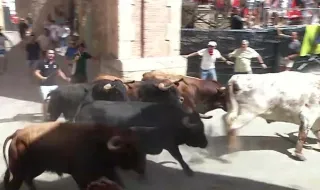
The impeccable image left by the second Entry of Bulls and Horses of Segorbe

The second edition of the Entry of Bulls and Horses of Segorbe was marked by the impeccable image of ten horsemen herding a herd of bulls practically from the beginning. This especially beautiful race again brought together crowds on Colón street on Tuesday to enjoy the star event of the traditional festivals.

El Periódico Mediterráneo - General08/09/26, 15:27
World

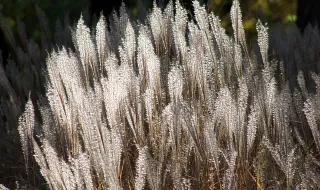
Invasive plant Cortadeira present in more than 200 Portuguese municipalities

Cortadeira, also known as pampas grass, is present in at least 208 municipalities in mainland Portugal, representing environmental and human health risks, specialists warned. Native to South America, this invasive plant was identified in 2025 among the ten species with the widest distribution in the country, and specialists argue that each delay in intervention increases costs and makes its control more difficult. The species has been prohibited since 2019, but the national plan prepared by ICNF remains unpublished. In addition to environmental damage, Cortadeira presents allergenic risks due to pollen, which can prolong the exposure season into Autumn. Researchers advocate coordinated action between central government, municipalities and citizens to contain its expansion.

Campeão das Províncias08/09/26, 15:16