State of Rio generates 4.5 million liters of leachate per day, study showsPhoto by MA05 on Pexels
Science
Образование
Инвестиции
Coimbra

State of Rio generates 4.5 million liters of leachate per day, study shows

oglobo8 September 2026 at 10:00

A study by the Master's program in Environmental Sciences at the University Veiga de Almeida (UVA), based on data from the National Basic Sanitation Information System (SINISA), revealed that the State of Rio de Janeiro generates 4.5 million liters of leachate per day.

Leachate is a highly polluting liquid generated from the decomposition of solid waste in landfills, representing one of the main environmental challenges related to waste management in the state.

The research draws attention to the dimension of the leachate management problem in Rio de Janeiro, highlighting the need for adequate solutions for the treatment of this effluent that is dangerous to the environment and public health.


Related articles

Science

SOM Mental Health: a 360º vision

SOM Mental Health 360º is a new platform that has arrived in Portugal with the aim of providing simple, reliable and clarifying information about mental health, bringing together in one place accessible resources for all those who seek to better understand this topic.

Observador08/09/26, 10:40
Science

Smoking women face 40% higher infertility risk than non-smokers

A scientific study revealed that smoking women face a 40% higher risk of suffering from infertility compared to those who do not smoke. The research highlights the harmful effects of cigarettes on female reproductive health, once again reinforcing the importance of quitting smoking for those who wish to become pregnant.

Notícias de Coimbra08/09/26, 10:40
Science

Bruno Sarmento: Recognition and Excellence – Doctor Honoris Causa from the University of Buenos Aires

Bruno Sarmento, researcher at the Institute of Investigation and Innovation in Health (i3S) at the University of Porto, received the title of Doctor Honoris Causa from the Faculty of Pharmacy and Biochemistry at the University of Buenos Aires, one of the most prestigious institutions in Latin America. This honor recognizes the impact of his work in pharmaceutical technology, nanomedicine, and drug delivery systems, with the scientist having led international projects and trained professionals from various countries. Sarmento, who leads the Nanomedicines & Translational Drug Delivery group at i3S and is president of the Controlled Release Society, stated that the distinction represents a tribute to his group's work and collaboration with the Argentine institution, emphasizing the importance of international scientific cooperation. With over 550 scientific publications and a career that began in 2002 with a degree in Pharmaceutical Sciences, he currently dedicates himself to the development of technologies for the treatment of metabolic, inflammatory, and oncological diseases.

Notícias Portugal08/09/26, 10:36
El fuego pudo encender el lenguaje humano: las hogueras que impulsaron el origen del habla
Science

Fire may have ignited human language: the bonfires that drove the origin of speech

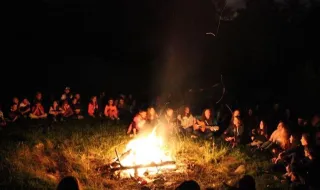
New research suggests that bonfires may have been fundamental to the development of human language. Researchers discovered that the rhythm of flames produces frequencies similar to brain rhythms and human speech, which would have facilitated social synchronization during nighttime conversations. Fire also would have encouraged the transition from gestural to oral communication, by making distant gestures difficult but offering a shared visual stimulus that invited storytelling. This theory indicates that bonfires were not only sources of heat and light, but social catalysts that shaped the evolution of language.

El Periódico Mediterráneo - General08/09/26, 10:17