The brain is building its successorPhoto by milaoktasafitri on Pexels
Technology

The brain is building its successor

Jornal Económico8 September 2026 at 00:06

The article by Luís Rita explores the central paradox of the artificial intelligence revolution: human biological neural networks, over billions of years of evolution, have created artificial neural networks whose results are now transforming the environment that will shape human evolution itself. The human brain has approximately 86 billion neurons, while models such as DeepSeek-V3 have 671 billion parameters, although an artificial parameter does not correspond directly to a biological neuron or synapse, which change over time and depend on electrical activity, chemical signals and neuromodulators.

In the energy comparison, the brain operates on just about 20 watts, simultaneously maintaining perception, memory, language, motor control and consciousness. Training Llama 3.1 with 405 billion parameters is estimated to have consumed approximately 21.6 gigawatt-hours of energy, equivalent to the operation of a 20-watt brain for more than 120,000 years. After training, each query to a frontier model consumes approximately 0.34 watt-hours, roughly the energy the brain uses during one minute, although the brain simultaneously processes balance, temperature, emotions and signals from all organs.

Limited cycles of self-improvement already exist in artificial networks, such as AlphaEvolve and SIMA 2, which generate programs, automatically evaluate them and use the experience to train subsequent versions. UNESCO adopted in November 2025 the first global regulatory framework for neurotechnology ethics, and Portugal approved in January 2026 a National Artificial Intelligence Agenda with 32 initiatives and more than 400 million euros by 2030. Brain-computer interfaces have already allowed tetraplegic patients to walk again, and Neuralink has given public visibility to the field, although the most consolidated clinical evidence belongs to a broader scientific field.

The article concludes that the decisive question may no longer be whether machines will become human, but whether humans will remain exclusively biological. Luís Rita argues that in the long term, gradual integration between biological and synthetic intelligence could be the only strategy to avoid permanent separation, but warns that the brain cannot become a subscription-based platform, requiring open norms, interoperability, portability of neuronal data and prohibition of commercial lock-in.


Related articles

Por 30 dólares por hora robôs humanoides oferecem serviços de limpeza em São Francisco
Technology

For 30 dollars per hour humanoid robots offer cleaning services in San Francisco

A robotics company based in San Francisco, California, launched a pilot program that offers cleaning services for homes and commercial establishments through humanoid robots, charging 30 dollars per hour for the service. The initiative aims to expand to other regions of the United States and later to the global market.

SAPO08/09/26, 00:32
Technology

With AI, what becomes scarce in companies?

An article discusses how artificial intelligence is transforming companies and what becomes scarce in this new context. The analysis highlights that the countries that will benefit most from this transformation will not necessarily be those that created the most sophisticated AI models, but rather those that manage to reinvent the way they work, adapting processes and organizational cultures to the new technological reality.

Observador08/09/26, 00:02
Technology

Army humanoid robot salutes Lula during September 7th parade

A humanoid robot from the Military Engineering Institute (IME) of the Brazilian Army drew attention by saluting President Lula during the September 7th Parade on the Esplanade of Ministries in Brasília. The equipment, dressed in camouflage uniform and transported on a Marruá vehicle, performed the military salute while passing in front of the grandstand where Lula, Janja and other authorities were. Janja responded with a smile and applause to the salute. The moment went viral on social media. The humanoid is part of IME studies related to artificial intelligence, robotics and automation.

oglobo07/09/26, 23:48
Os ecrãs gigantes chegaram aos carros. Os condutores querem os botões de volta
Technology

Giant screens have arrived in cars. Drivers want the buttons back

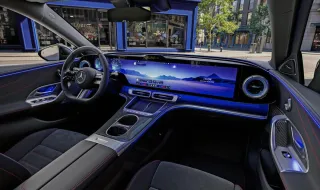
Major car brands are installing increasingly large screens on their vehicle dashboards, which often extend beyond the driver's area to include the front passenger. However, a J.D. Power study reveals that many owners do not place great value on this technology, preferring physical buttons to touchscreens. Companies are facing difficulties justifying higher prices based solely on the presence of screens.

ZAP Notícias07/09/26, 23:30