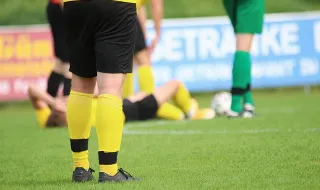
To the JPP supporters about the new Sousa warehouses in FigueirinhasPhoto by Military_Material on Pexels
Politics
Инвестиции
Madeira

To the JPP supporters about the new Sousa warehouses in Figueirinhas

Madeira Opina7 September 2026 at 02:18

The article addresses the controversy about new Sousa warehouses at Figueirinhas, on the Island of Madeira, and the political responsibility for their licensing. The author argues that Figueirinhas and the Cancela area belong to the parish of Caniço, integrated in the municipality of Santa Cruz, which is governed by JPP, and not to Funchal as some commentators incorrectly stated.

The licensing of works, the change of land use, the approval of architectural projects and the collection of municipal taxes in that area are the exclusive responsibility of the Santa Cruz Municipal Council, governed by its Municipal Master Plan. The author criticizes JPP supporters who tried to attribute responsibility to Funchal, considering that they demonstrate ignorance of municipal geography or try to divert attention from the urban planning decisions made by their own council.

The article also addresses an attempt to use the proximity of the Funchal Prison Establishment as justification for restrictions on licensing. The author argues that the warehouse expansion area is physically separated from the prison by topography and road network, without overlapping security perimeters or administrative easements that would require intervention from the Ministry of Justice or the DGRSP.

A local resident, who lives in front of the new warehouses, reports the negative impact on the quality of life in the neighborhood, describing the transformation of a quiet residential area into one with warehouses and trucks. The author concludes that the political responsibility for changing the profile of that area lies with the Santa Cruz Municipal Council and JPP, accusing party supporters of practicing disinformation and personal attacks against those who questioned the decision.
Related articles

Politics

Without citing criticisms in PF report, Messias says public function is not guided by 'friendships' and affirms he has Lula's backing

The Attorney General of the Union, Jorge Messias, issued a note this Sunday defending himself from criticisms present in a Federal Police report that questioned his refusal to file appeals to the Supreme Federal Court against decisions by Minister André Mendonça in investigations into Banco Master and INSS fraud. Messias stated that public function "must never be guided by friendships, affinities or personal circumstances", but by the Constitution and the rules of the Republic, and highlighted that he has the backing of President Lula to exercise the position with "technical independence, legal rigor and absolute fidelity to the Constitution".

oglobo07/09/26, 02:25
Politics

Lula affirms that Brazil is not a colony in September 7th address

President Luiz Inácio Lula da Silva defended Brazilian sovereignty in a televised address on Independence Day, authorized by the Superior Electoral Court (TSE). In the speech, Lula criticized external interference in national affairs and highlighted the country's natural wealth, including oil, minerals and biodiversity, stating that Brazil is not a colony. The address occurs in a context of internal political tensions and concerns about the integrity of democratic institutions.

Pt Noticias07/09/26, 02:01
Politics

The Neat-Freak Hulk of Portuguese Politics

The article analyses the figure of André Ventura, leader of the Chega party, using the "neat-freak Hulk" metaphor to describe the political phenomenon he represents. The image captures the duality of the politician: inside, a fury ready to erupt at the slightest pretext, with intensified moral outrage, pointed gestures and an elevated tone; outside, a carefully constructed image with an impeccable tie, rehearsed speech and calculated smile for the cameras. It is the representation of a beast domesticated by fine tailoring, where the blazer replaces wild fury with an appearance of political respectability.

dnoticias.pt07/09/26, 02:00
Politics

Lack of Autonomy

The article analyses Paulo Freire's thinking on autonomy, highlighting that although the Brazilian educator never developed a formal theory on the political autonomy of a people, his work "Pedagogy of Autonomy" offers profound reflections on the conditions that enable a person and a community to cease being passive objects of others' decisions and become autonomous subjects of their own history.

dnoticias.pt07/09/26, 02:00