The 2026 World Cup ended on July 19 with Spain as champion, but the tournament left a reading that goes far beyond the sporting result. For 39 days, football was again something more than football: a political showcase, an instrument of influence, and a mirror of an increasingly fragmented world.
Among the most prominent political moments was a mural of Lamine Yamal in the Gaza Strip, which demonstrated how sport can transcend borders and carry symbolic messages. The white shirt of the Spanish national team also became a symbol of a new era in Spanish football, associating itself with values of renewal and national identity.
The tournament was organized by three countries with tense relations with each other, which in itself already represented a significant diplomatic challenge. This multi-national configuration ended up transforming the championship into an arena of geopolitical influences, where the organizers tried to balance sometimes contradictory interests.
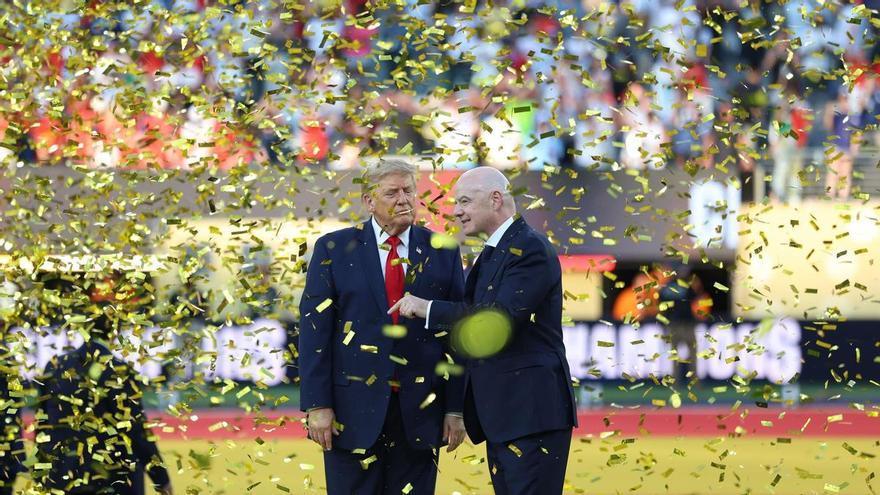
The president of the United States emerged as another central figure in this political landscape, showing a willingness to take center stage during the event. Taken together, the article suggests that this World Cup can be read as a photograph of contemporary global power, where sport serves simultaneously as entertainment and as a symbolic battleground between nations.