Portugal Launches Innovative Initiative with Support from the European Research CouncilPhoto by Marta Branco on Pexels
Science

Portugal Launches Innovative Initiative with Support from the European Research Council

Notícias Portugal5 September 2026 at 10:32

Portugal secured new funding from the European Research Council (ERC) under the Starting Grant 2026 Competition. Researcher Nikita Melnikov, from NOVA SBE, was selected with the project "CRACKDOWNS — Labour Mobility, Development, and Discrimination in Post-Gang El Salvador", which aims to deepen research in the areas of political economy and development. This funding can reach up to 1.5 million euros over a five-year period.

Starting Grants aim to support early-career researchers, promoting their scientific independence and the formation of research teams. In this edition, the ERC distributed a total of 705 million euros among 421 researchers, with an overall success rate of 8.8%. The number of applications grew by 22% compared to the previous edition, and in Portugal, submitted proposals increased by 10%.

With this latest achievement, Portugal now has 29 Starting Grants obtained by researchers from national institutions since the beginning of the Horizon Europe program in 2021. Of this total, 10 are from the Life Sciences area, 10 from Social Sciences and Humanities, and 9 from Physical Sciences and Engineering. The "Choose Europe for Science" initiative had an impact on the 5% increase in winners with scientific activities transferred to institutions in the European Union or countries associated with Horizon Europe.

The ERC also announced new guidelines for its Work Programme for 2027, which include changes to the eligibility windows for the Starting Grant and Consolidator Grant competitions. The Foundation for Science and Technology (FCT) coordinates national participation in the ERC, offering support at various stages of the process through programs such as ERC-PT Pre-Assessment and ERC-PT A-Projects.


Related articles

Queda de cabelo ou alopecia? Um especialista explica as diferenças e como tratar
Science

Hair loss or alopecia? An expert explains the differences and how to treat it

This article addresses the difference between common hair loss and alopecia, based on an interview with trichologist doctor Henrique Machado. The specialist explains that hair loss can be a natural process, while alopecia is a more complex medical condition that can have various causes, including genetic, autoimmune, and hormonal factors. Machado details the types of alopecia, diagnostic methods, and available treatment options, from topical and medicinal treatments to more advanced procedures, warning about the importance of seeking a specialist for a correct and timely diagnosis.

SAPO Notícias05/09/26, 11:14
Science

Health warnings may reduce young people's time on social media

A new study found that pop-up messages warning about the harms of social media may be effective in reducing the time young people spend on these platforms. The research suggests that these health warnings work as a tool to raise awareness among younger users about the negative effects of excessive social media use.

Euronews Portugal05/09/26, 11:02
A primeira pegada de mamífero da Antártida tem 55 milhões de anos
Science

The first mammal footprint in Antarctica is 55 million years old

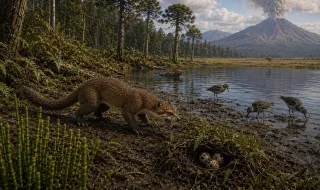
Scientists discovered the first terrestrial mammal footprint in Antarctica, approximately 55 million years old, at the Fossil Hill Formation, on King George Island. The specimen, identified as T-373, was described in a study published in the journal Polar Biology and represents a significant discovery, given that the fossil record of terrestrial mammals in Antarctica is extremely scarce. Footprints and fossil traces can provide important information about ancient environments and the distribution of animals that inhabited the continent in the past.

ZAP Notícias05/09/26, 11:00
Vírus do Nilo Ocidental acelera na Europa. Portugal continua sem casos locais
Science

West Nile virus accelerates in Europe. Portugal still has no local cases

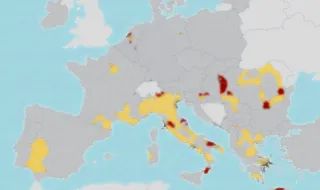
West Nile virus infections are increasing in Europe, with 15 countries already affected and more than a thousand cases recorded since the start of the transmission season, associated with the warmer months. Spain has 88 confirmed cases. Portugal still has no known cases of local human infection, so far escaping the virus, according to data from the European Centre for Disease Prevention and Control (ECDC).

ZAP Notícias05/09/26, 10:40