
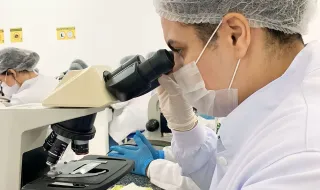
Scientists discover natural "cloud factory" in the Arctic that did not appear in climate modelsPhoto by ARYANE VILARIM on Pexels
Science
Образование
Космос
Leiria

Scientists discover natural "cloud factory" in the Arctic that did not appear in climate models

Meteored Portugal4 September 2026 at 08:03

Scientists discovered that Arctic sea ice melting triggers a natural process capable of multiplying by fifty, in a single day, the number of cloud-forming particles in the atmosphere. This phenomenon, identified in research led by the University of Boundary, was not previously documented and occurs specifically near the edge of melting sea ice.

According to the most recent climate data, the Arctic is warming more than three times faster than the rest of the planet. This accelerated warming is closely linked to the process now discovered, which transforms the region into a kind of natural "cloud factory."

Researchers have observed the significant influence these clouds have on the amount of heat absorbed or reflected back into space. However, they have encountered difficulties in determining the true origin of the tiny particles that form the clouds, especially in such a remote region of the globe.

This discovery represents a significant breakthrough in understanding Arctic climate mechanisms, a region that continues to present scientific challenges due to its remote location and the complexity of atmospheric processes occurring there.

Related articles

Science

Work anxiety symptom can be mistaken for laziness

A HuffPost article, replayed this Thursday, reveals that work procrastination — frequently interpreted as negligence — is often an anxiety symptom. Psychologists and psychotherapists explain that, when professional pressure exceeds the individual's response capacity, the nervous system enters alert mode and reacts with "freezing," perceiving the task list as a threat. This defense mechanism, although providing momentary relief, feeds a vicious cycle of avoidance and growing anguish. In Portugal, where professional burnout indicators are particularly high in the European Union, specialists warn against excessive self-criticism and recommend five practical strategies: rigorous weekly planning, scheduled breaks, starting with simple tasks, priority resolution of the main obstacle, and softening guilt.

oRegiões04/09/26, 09:15
Science

Researchers successfully test genetic editing strategy for Machado-Joseph disease

Researchers from the Centre for Neuroscience and Cell Biology at the University of Coimbra (CNC-UC) and GeneT – Centre of Excellence in Gene Therapy successfully tested a genetic editing strategy for Machado-Joseph disease, a neurodegenerative disease that affects the brain and motor abilities. The study reveals new data that may contribute to the development of therapeutic approaches for this pathology, opening promising prospects for future treatments.

PT Jornal04/09/26, 09:14
Science

CSIC creates magnetic "nanoflowers" that capture and transform nanoplastics from water

Researchers from the Instituto de Ciencia de Materiales de Madrid at CSIC have developed magnetic iron oxide "nanoflowers" that can capture PET nanoplastics from water and transform them into reusable materials capable of removing other pollutants, such as dyes and heavy metals. These structures, with a flower-like shape and nanoscale size, use magnetic force for efficient separation and can be recycled up to five times without losing effectiveness, representing a significant advancement for contaminated water treatment and for a circular economy in plastic waste management.

Euronews Portugal04/09/26, 09:04
Science

How is excess mortality due to heat calculated in Portugal?

The article explains how excess mortality due to heat is calculated in Portugal, highlighting the ÍCARO surveillance system, coordinated by the National Health Institute. Instead of counting deaths officially attributed to heat, the system measures how many deaths occur above the expected number for each period, using statistical and epidemiological methods to separate the impact of high temperatures from the usual mortality variation. When temperatures exceed 40°C, epidemiologists can detect the "statistical signature" left by heat, even when it does not appear as a direct cause on death certificates.

Meteored Portugal04/09/26, 09:04