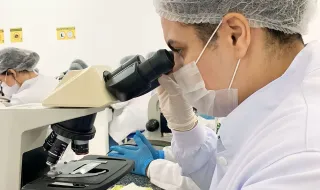
Can GHK-Cu Rejuvenate Skin? Understand What We Know So FarPhoto by Laura Beauty Designer | Brasil on Pexels
Science
Инвестиции
Космос
Coimbra

Can GHK-Cu Rejuvenate Skin? Understand What We Know So Far

oglobo4 September 2026 at 08:00

For a long time, the concept of rejuvenation was mainly associated with visible results, such as smoothing wrinkles, improving sagging, restoring volume, and making skin more even. In recent years, however, the discussion has also come to include processes that occur within the tissues, which has opened space for new ingredients and approaches.

It is in this scenario that GHK-Cu, a copper-binding peptide, has gained prominence in beauty and longevity discussions. The ingredient appears in skin products and has also begun to be discussed in strategies beyond skincare, including oral and injectable versions.

The interest in GHK-Cu is related to studies that investigate its participation in processes linked to tissue repair, collagen production, and skin organization. However, the popularity of the active ingredient does not mean that all these applications have the same scientific backing.

The discussion about facial rejuvenation has also been fueled by debates about celebrities' faces, which have raised questions about the boundaries between subtle procedures and more visible results.

Related articles

Science

Work anxiety symptom can be mistaken for laziness

A HuffPost article, replayed this Thursday, reveals that work procrastination — frequently interpreted as negligence — is often an anxiety symptom. Psychologists and psychotherapists explain that, when professional pressure exceeds the individual's response capacity, the nervous system enters alert mode and reacts with "freezing," perceiving the task list as a threat. This defense mechanism, although providing momentary relief, feeds a vicious cycle of avoidance and growing anguish. In Portugal, where professional burnout indicators are particularly high in the European Union, specialists warn against excessive self-criticism and recommend five practical strategies: rigorous weekly planning, scheduled breaks, starting with simple tasks, priority resolution of the main obstacle, and softening guilt.

oRegiões04/09/26, 09:15
Science

Researchers successfully test genetic editing strategy for Machado-Joseph disease

Researchers from the Centre for Neuroscience and Cell Biology at the University of Coimbra (CNC-UC) and GeneT – Centre of Excellence in Gene Therapy successfully tested a genetic editing strategy for Machado-Joseph disease, a neurodegenerative disease that affects the brain and motor abilities. The study reveals new data that may contribute to the development of therapeutic approaches for this pathology, opening promising prospects for future treatments.

PT Jornal04/09/26, 09:14
Science

CSIC creates magnetic "nanoflowers" that capture and transform nanoplastics from water

Researchers from the Instituto de Ciencia de Materiales de Madrid at CSIC have developed magnetic iron oxide "nanoflowers" that can capture PET nanoplastics from water and transform them into reusable materials capable of removing other pollutants, such as dyes and heavy metals. These structures, with a flower-like shape and nanoscale size, use magnetic force for efficient separation and can be recycled up to five times without losing effectiveness, representing a significant advancement for contaminated water treatment and for a circular economy in plastic waste management.

Euronews Portugal04/09/26, 09:04
Science

How is excess mortality due to heat calculated in Portugal?

The article explains how excess mortality due to heat is calculated in Portugal, highlighting the ÍCARO surveillance system, coordinated by the National Health Institute. Instead of counting deaths officially attributed to heat, the system measures how many deaths occur above the expected number for each period, using statistical and epidemiological methods to separate the impact of high temperatures from the usual mortality variation. When temperatures exceed 40°C, epidemiologists can detect the "statistical signature" left by heat, even when it does not appear as a direct cause on death certificates.

Meteored Portugal04/09/26, 09:04