Can Endometriosis Affect Mental Health? Understanding the Relationship with the DiseasePhoto by Larissa G. on Pexels
Science
Инвестиции
Coimbra

Can Endometriosis Affect Mental Health? Understanding the Relationship with the Disease

oglobo3 September 2026 at 08:01

Celebrities have helped expand the conversation about endometriosis, a disease that can accompany women for years and interfere with different aspects of life. Giovanna Ewbank was one of the famous figures to speak publicly about her experience, highlighting an aspect that doesn't always appear when the topic is the condition: the emotional strain caused by prolonged coexistence with symptoms and limitations. Camilla de Lucas also used her social media to talk about the disease, posting before an exam and warning about the importance of not leaving it for later.

Giovanna's account brings to the center of discussion an issue that goes beyond the physical manifestations of endometriosis, also involving routine, relationships, work, and plans for the future. The disease can cause intense cramps, pelvic pain, discomfort during sexual intercourse, and pain during bowel movements, in addition to other symptoms that affect the quality of life of patients.

Endometriosis occurs when there is tissue similar to the endometrium outside the uterine cavity. This chronic condition can accompany women for long periods, generating impacts that extend beyond the physical and affect the emotional and mental well-being of patients.

Related articles

Science

New mosquito arrives in Europe and can survive the cold

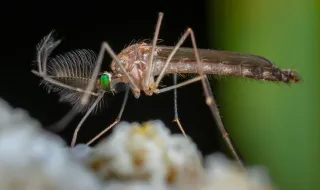
An invasive mosquito capable of withstanding lower temperatures than similar species is spreading across Europe. This mosquito, identified as Aedes koreicus, has adapted to colder climates and has already been found in several European countries, including Belgium, Germany, Hungary, Italy and Slovenia, representing a potential threat to European public health.

Notícias de Coimbra03/09/26, 09:57
Science

Researcher from Coimbra elected president of the European Sociological Association

Ana Cristina Santos, a researcher at the Centre for Social Studies at the University of Coimbra, was elected president of the European Sociological Association (ESA) until 2028, during the 17th ESA Congress at the University of Warsaw. A sociologist with a PhD in Gender Studies from the University of Leeds and a Coordinating Researcher with Habilitation in Human Rights, Santos is an expert on LGBTQI+ issues, body, citizenship and aging, having received two grants from the European Research Council. The election takes place at a time she describes as particularly challenging for democracy and science, defending that Sociology should be a beacon of justice, diversity and dignity, promoting critical thinking and evidence-based knowledge.

Campeão das Províncias03/09/26, 09:42
Ricardo Biscaia, coordenador do estudo Edulog: «Sempre foi dito que a média não importa, mas a verdade é que importa»
Science

Ricardo Biscaia, Edulog study coordinator: "It has always been said that the average doesn't matter, but the truth is that it does"

Ricardo Biscaia, coordinator of the Edulog study "Results in the Labor Market of Portuguese Higher Education Graduates", spoke with Human Resources about the main conclusions of the research. The study analyzes the performance of graduates in the Portuguese labor market, with Biscaia highlighting that, contrary to what has been frequently said, the average of results actually matters and is a relevant indicator for evaluating the effectiveness of higher education.

SAPO Notícias03/09/26, 09:40
Science

Telescope "with Portuguese hands" in Chile records observation

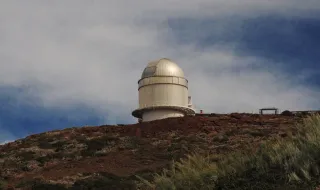
A spectrograph with Portuguese participation, called "Moons", installed on the 10.4-meter telescope at the Roque de los Muchachos Observatory, in La Palma, achieved its first scientific observation, recording the spectrum of a distant galaxy. The instrument is described as "decisive for understanding how galaxies formed and evolved", and the principal investigator of the project hopes it will allow "understanding what led to the peak of galaxy activity", a phenomenon that occurred approximately 10 billion years ago.

Observador03/09/26, 09:40