"Geopolitical precaution". Dutch central bank withdraws 86 tonnes of gold from America
Business
США
Экономика
Setúbal

"Geopolitical precaution". Dutch central bank withdraws 86 tonnes of gold from America

ZAP Notícias3 September 2026 at 06:40

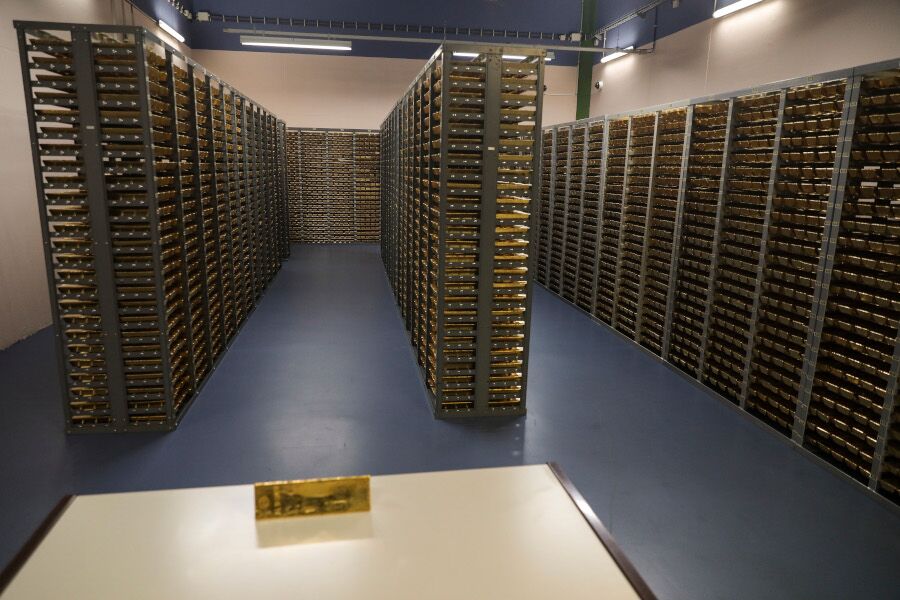
The central bank of the Netherlands, the DNB, announced that it transferred 86 tonnes of its gold reserves from the United States and Canada to London. This decision was made citing reasons of "growing geopolitical instability" as justification for the redistribution of reserves.

The DNB stated that gold reserves held in London can be traded more easily than those kept in New York and Ottawa. The measure aims to guarantee faster access to gold in case of crisis.

London comes out strengthened by offering the most liquid market and greater ease of mobilization for gold reserves. This transfer is part of a geopolitical precaution strategy on the part of the Dutch central bank.


Related articles

Business

European Union without immediate risk of gas supply despite low reserves

The European Commission announced that, although EU gas storage levels are below those recorded in previous years, there is no immediate risk to energy supply security. The Gas Coordination Group's assessment indicates that the EU is more prepared than in 2021 and 2022, thanks to the diversification of supply sources, increased LNG import capacity and reduced demand. However, instability in the Middle East keeps Qatar's LNG production suspended, and heat waves in Europe increased gas demand for electricity production, causing price volatility. Portugal stands out with 93.08% of reserves full, one of the highest rates in the EU. A new group meeting is scheduled for September 24.

Jornal Económico04/09/26, 00:26
Business

Portuguese textiles and clothing asserts itself as a hub for sustainability innovation

A study by the Francisco Manuel dos Santos Foundation analyzed how the Portuguese textile and clothing industry has responded to sustainability challenges through innovation and value creation, establishing itself as a reference hub in this area. The research highlights the strategies adopted by the sector to integrate sustainable practices in production processes and the development of new products.

Now04/09/26, 00:22
Business

The PRR and its scrutiny

Portugal completed the Recovery and Resilience Plan (PRR) with the Government's guarantee that it fulfilled 100% of the milestones and targets agreed with Brussels, securing €16.3 billion in grants and planning to execute around €5.6 billion in loans. The article highlights that although financial execution is a positive result in a country with historical difficulties in applying European funds, administratively fulfilling a plan does not equate to economically transforming the country. It points to the need for independent assessment of the real impact of the €21.9 billion investment on productivity, competitiveness and growth capacity, warning that the Bank of Portugal anticipates an economic slowdown after the PRR boost and that the European Court of Auditors identified transparency limitations. The article argues that the end of the PRR must mark the beginning of rigorous scrutiny of concrete results.

Jornal Económico04/09/26, 00:18
Business

Sovereign debt in turmoil

The conflict in the Middle East is driving a new escalation in oil prices, approaching 100 dollars, which is fueling inflationary pressures and anticipates further interest rate hikes in September by the ECB and the Fed. Sovereign bond yields have surged in the Eurozone, the United Kingdom, and Japan, reaching 15-year highs, with massive bond sales by investors. Portugal, although not an exception and having seen debt yields rise to their highest level in a decade, is considered by the DBRS rating agency as one of the least affected countries, protected by positive economic dynamics, no longer belonging to the former PIIGS risk group. Now it is other countries, such as the United Kingdom, Italy, and France (BIF), that are facing market pressure, in a context of fear of global stagflation.

Jornal Económico04/09/26, 00:16