The President of the United States, Donald Trump, announced this Wednesday in Washington that elections in Venezuela remain suspended, stating that the South American country "is not yet ready" to hold democratic scrutinies, nine months after the US military operation that resulted in the capture and removal of former head of state Nicolás Maduro, ending more than 25 years of Chavista hegemony initiated by Hugo Chávez in 1999. Trump praised the current leader of the provisional executive in Caracas, Delcy Rodríguez, assuring that she is "doing a great job," although he stressed that the process is still too recent.
The postponement of elections comes in a context of complex transition. US Secretary of State Marco Rubio confirmed that a new formal round of dialogue between the Venezuelan provisional authorities and the opposition will take place in about ten days, following the first resumption of direct contacts in August. Rubio drew a parallel with the Eastern Europe transition, warning that "democratic elections are not just about holding a vote" and that prior institutional and operational safeguards are necessary.
In parallel, the economic dimension of the process advanced rapidly. US Secretary of Energy Chris Wright completed his second official visit to Venezuela this year, meeting with Delcy Rodríguez at the Miraflores Palace to consolidate an agreement granting US entities access to approximately 20 percent of Venezuela's proven crude reserves. The pact involves Chevron and the Italian group Eni for the exploitation of 17 producing fields with a potential of 65 billion barrels. Delcy Rodríguez expressed hope that the agreement would benefit both peoples and serve as a foundation for "international energy equilibrium."
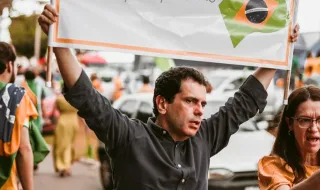
The indefinite postponement of elections and Washington's growing economic influence in Caracas generate internal opposition. Last weekend, dozens of supporters of the most intransigent Chavista factions demonstrated against agreements with US companies and against external tutelage of the political process. For Washington, however, control of the Venezuelan productive sector aims to ensure that "it will be the United States — and not China, Russia or Iran — that occupies a strategic position in relation to the largest oil producer" in the Western Hemisphere.