"We have to scale proportionally and without showing weakness". Leipzig was "the wake-up call" for EuropePhoto by Cansu Hangül on Pexels
World
Европейский союз
Украина
Военный конфликт
Санкции

"We have to scale proportionally and without showing weakness". Leipzig was "the wake-up call" for Europe

CNN Portugal2 September 2026 at 22:50

The article addresses the tension between the European Union and Russia in the context of the conflict in Ukraine. An unidentified source states that Europe needs to scale up its response proportionally and without showing weakness in the face of Russian actions.

The incident in Leipzig is described as "the wake-up call" for Europe, serving as a moment of alert for the need for a more coordinated and firm response from European countries.

The analysis presented suggests that Putin is deliberately testing Western resolve, seeking to assess to what extent Europe is willing to maintain its support for Ukraine. The European Union intends to respond with diplomatic sanctions, although the article raises doubts about the sufficient efficacy of this measure to deter Russian pressure.

Related articles

World

João Ferreira Dias: «Ceuta came to accelerate a problem that all of Europe is experiencing»

Analyst João Ferreira Dias commented that the situation in Ceuta came to accelerate a problem that affects all of Europe, placing strong political pressure on the Spanish government. He highlighted that the solidarity shown throughout Spain can be politically instrumentalized by the PP, by Vox, and by far-right movements.

Now03/09/26, 01:37
Katmandu e China elevam para 1.225 número de mortos uma semana após cheias
World

Kathmandu and China raise death toll to 1,225 a week after floods

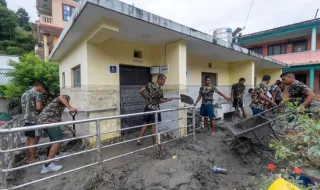
At least 1,225 people died and 4,757 remain missing in Nepal and China, one week after devastating floods devastated the border between the two countries. On the Nepal side, the death toll rose to 1,204 and the missing to 4,216, including at least 583 children.

dnoticias.pt03/09/26, 01:26
World

The Strait of Hormuz cannot be subject to Iran's free will

The article addresses the geopolitical situation of the Strait of Hormuz, highlighting that it cannot be subject to Iran's free will. It also mentions Moscow's threats, the Kremlin's role in international tensions, Dmitry Medvedev's aggressive rhetoric, and Russian pressure on German policy, at a time of growing regional and diplomatic instability.

Now03/09/26, 01:17
World

The children again

The author addresses, for the third time, issues related to children in his column, recognizing that it may be repetitive for some readers. However, he justifies his interest by the fact that children cannot solve their own problems, although this does not mean that these problems do not exist.

SAPO Notícias03/09/26, 01:08