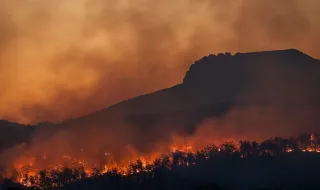
A global catastrophe could affect food, energy, infrastructure and basic services in different parts of the world. However, some societies would be better prepared to resist and recover from such a scenario. This was the question an international group of scientists tried to answer in a study published in the journal 'Global Challengers' and led by Florian Ulrich Jehn. The team analyzed scientific publications on risks capable of simultaneously affecting different regions. The study analyzed three main scenarios: an extreme reduction of sunlight due to nuclear winter, volcanic winter or asteroid impact; widespread loss of infrastructure due to phenomena such as cyberattacks or geomagnetic storms; and biological threats, including pandemics. Austria appears to have been analyzed as part of the study, though the full list of countries and detailed findings are not fully visible in the provided text.
Which countries are best prepared for the 'end of the world'? Here's what science says
oglobo2 September 2026 at 17:49
Related articles