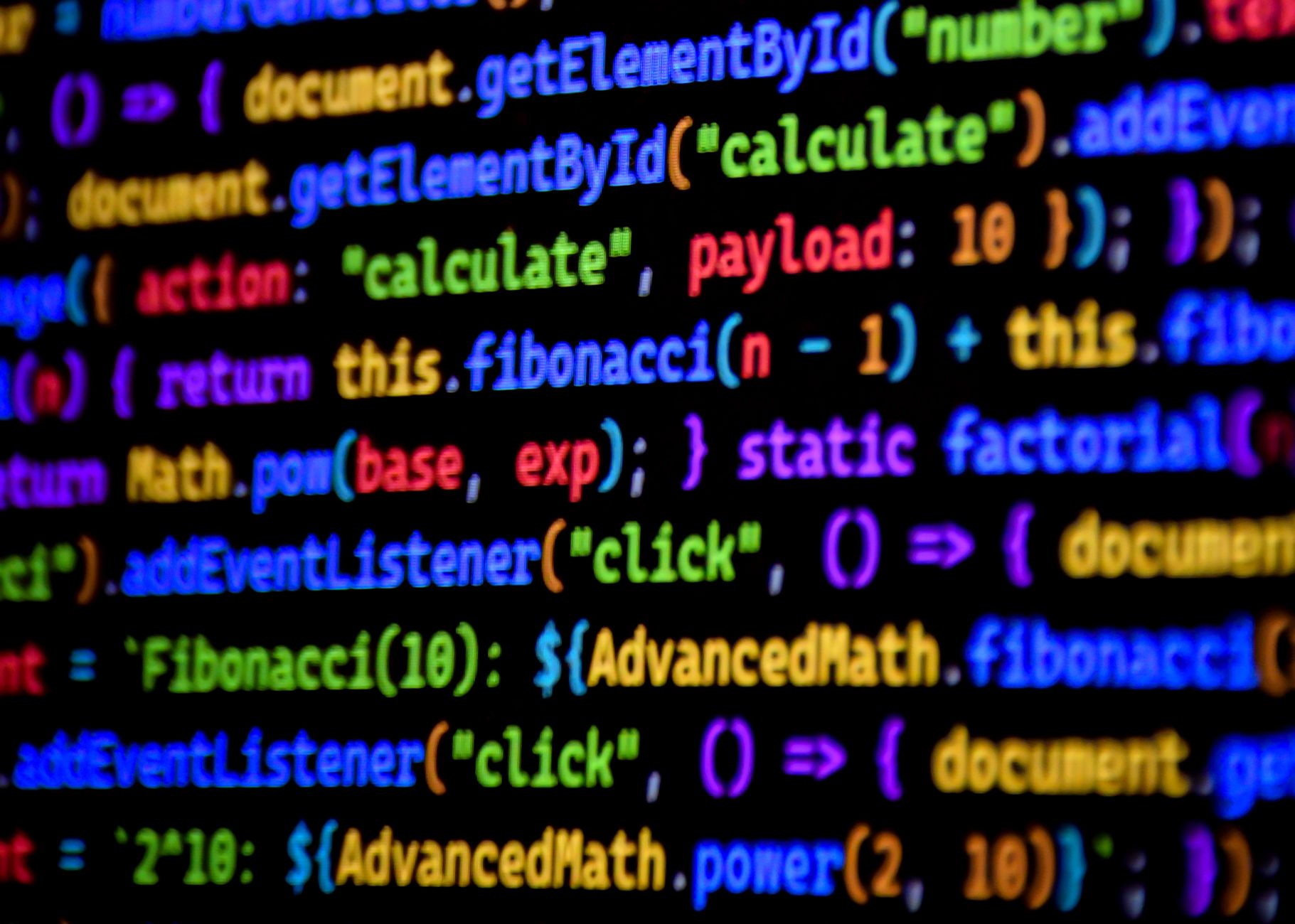
When algorithms create legal problems</minimax:tool_call>: When algorithms create legal problems. This translation is concise and maintains the meaning of the original Portuguese text. The phrase captures the idea of legal issues arising from algorithmic systems, which is a relevant topic in technology law and ethics.Photo by Rashed Paykary on Pexels
Technology
Инвестиции
Санкции

When algorithms create legal problems</minimax:tool_call>: When algorithms create legal problems. This translation is concise and maintains the meaning of the original Portuguese text. The phrase captures the idea of legal issues arising from algorithmic systems, which is a relevant topic in technology law and ethics.

Eco1 September 2026 at 10:11

Meta reached a settlement that could cost it about $17 billion, putting an end to a significant part of the litigation concerning the effects of Facebook and Instagram on minors. The agreement requires changes to the platforms, including usage limits, nighttime blocking, notification restrictions, and the option for a non-personalized feed. The author analyzes this case as an example of one of the effects of algorithms on social media: the capture of attention. The algorithms learn from users' behavior, but knowing attention is not knowing will. They may read behaviors as preferences and give more of the same.

The problem extends far beyond social media. Algorithms already support clinical diagnoses, assess credit risk, select job candidates, adjust prices, detect fraud, and establish priorities in security systems. It is in the translation of legitimate objectives into data, criteria, and metrics that legal problems can arise. A recruitment algorithm can reproduce past discriminations, a credit model can disadvantage certain groups, and clinical systems can be less reliable for populations poorly represented in the data.

The author argues that intention does not solve the problem: an algorithm can fulfill exactly the purpose for which it was created and produce legally problematic effects that no one intended. As algorithms enter the ordinary operations of companies across all sectors, the possibilities for errors, discriminations, or other unforeseen effects on rights, property, health, opportunities, or safety increase. The use of algorithms is also a risk management problem, requiring companies to explain anticipated risks, data and criteria used, tests performed, and mitigation mechanisms.

The AI Act seeks to anticipate some of these problems, but the comparison with the United States is misleading. In the United States, regulation also occurs through regulators, courts, civil liability, and settlements that impose concrete changes to products. The author argues that the next major wave of mass litigation will revolve around algorithms, and that in Portugal, where class actions favor collective litigation, a design error can quickly turn into a lawsuit against a company on behalf of thousands of people. He concludes that many of the decisions that will tomorrow have to be explained to a regulator or court are today being made by those who design the algorithms.

Related articles

MapQuest disse não a Trump e está a esmagar o Google Maps na App Store
Technology

MapQuest said no to Trump and is crushing Google Maps on the App Store

MapQuest, a map service that seemed obsolete 20 years ago, is surprising by surpassing Google Maps on the App Store. The article suggests this unexpected success may be related to the company's decision to refuse services related to Trump, which has contributed to a turnaround in the application's popularity among users.

SAPO Notícias01/09/26, 12:30
Technology

SAS completes Starlink installation across entire Airbus A320neo fleet

SAS – Scandinavian Airlines has completed the installation of Starlink's high-speed Wi-Fi system across all 81 Airbus A320neo aircraft in its short-haul fleet, representing approximately 70% of its total fleet. The installation was completed in record time, in parallel with normal flight operations, with each aircraft undergoing testing and approval before returning to service. The airline will now proceed with installation on other aircraft types, coinciding with SAS's 80th anniversary. Starlink technology uses a network of low-Earth orbit satellites to provide high-speed, low-latency connectivity on board aircraft.

NewsAvia01/09/26, 12:25
Technology

VMware brings Nemotron, Gemma, Qwen and GLM to its private AI cloud

Broadcom announced at VMware Explore 2026 the expansion of VMware Cloud Foundation's (VCF) artificial intelligence capabilities, with the validation of models from organizations such as NVIDIA, Google DeepMind, NEC, Alibaba Cloud and Z.ai. The validated models include Nemotron 3, Gemma 4, cotomi, Qwen3.8-27B and GLM 5.2, enabling companies to run more than 150 open models on their own private infrastructures. The platform is compatible with AMD, Intel and NVIDIA technologies, combining traditional virtual machines with AI agents on the same infrastructure. The initiative responds to the trend of 56% of companies that already use or plan to implement AI inference on private clouds, offering greater control over data, costs and privacy.

Notícias Portugal01/09/26, 12:17
Dyson CameraJet: nova escova de dentes tem uma câmara e sabe onde precisa de limpar
Technology

Dyson CameraJet: new toothbrush has a camera and knows where it needs to clean

James Dyson revealed in Paris the CameraJet, a revolutionary toothbrush equipped with a camera that uses Gap Optical Targeting technology to identify spaces between teeth that need cleaning. It is the only toothbrush on the market with this integrated visualization functionality, promising a new approach to oral hygiene.

SAPO Notícias01/09/26, 11:59