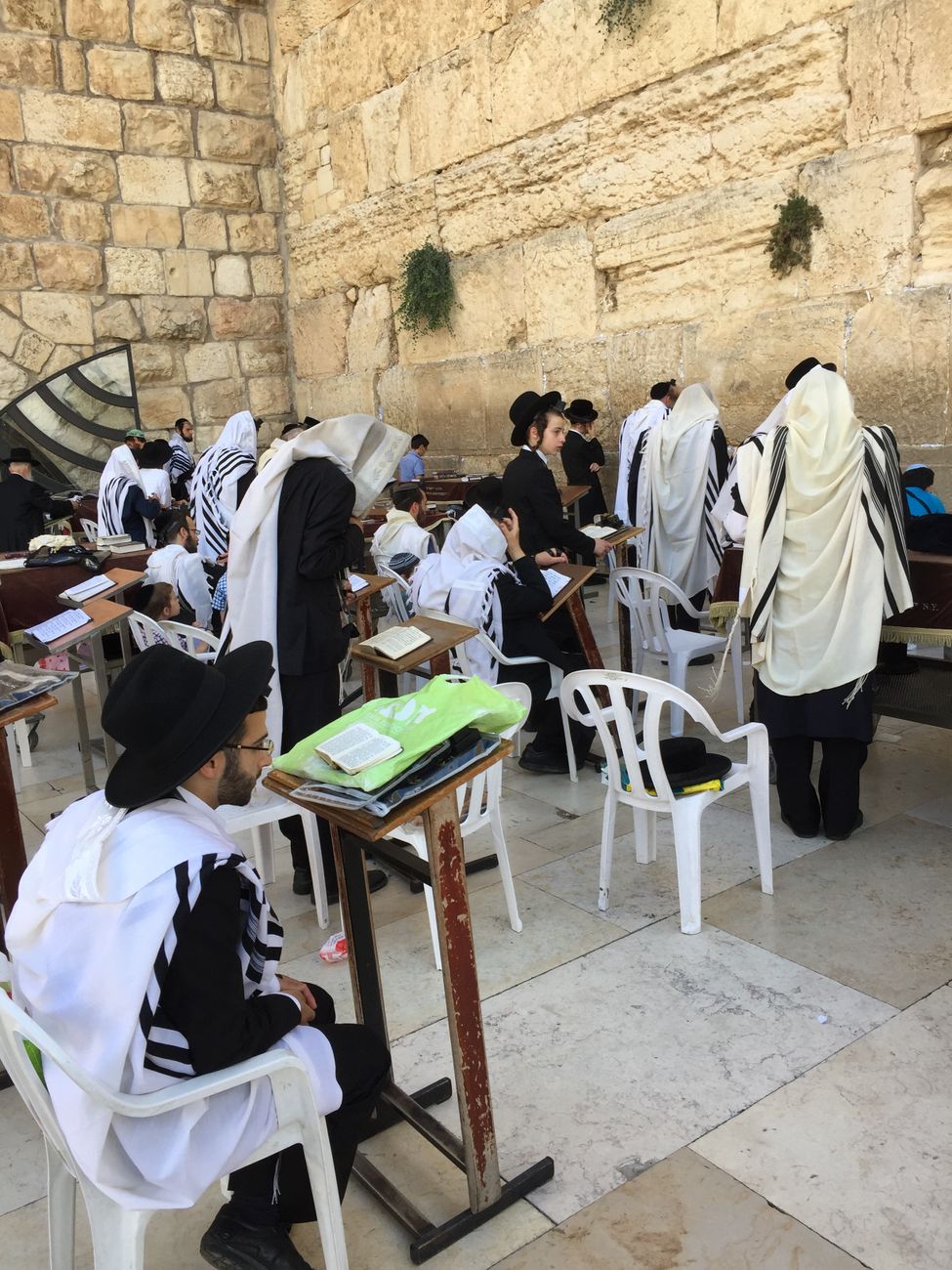
Israeli school curriculum replaces the Palestinian one in Jerusalem schoolsPhoto by Alfredo Phipps on Pexels
Politics
Образование
Военный конфликт

Israeli school curriculum replaces the Palestinian one in Jerusalem schools

RTP Notícias1 September 2026 at 06:30

The General Government of East Jerusalem reported that Israel will impose its educational program on Palestinian schools in this area of the city starting this school year. The decision was announced today and represents a significant change in the educational system of the region.

Palestinian schools in East Jerusalem will now be forced to adopt the Israeli curriculum. This area of the city was occupied by the Israeli army in 1967 and later annexed by Israel in 1980, in a decision not recognized by most of the international community.

The General Government of East Jerusalem, the entity that administers Palestinian affairs in the occupied zone, expressed its opposition to this measure through the report made today. The imposition of the Israeli educational program marks a new stage in the Israelization policy in the region.


Related articles

Politics

From the integration of taxis into the mandatory seal, the new TVDE law enters into force today

The new Law No. 59/2026 amending the TVDE (remunerated transport of passengers in electronically provided vehicles) regime enters into force today, integrating taxis into this category for the first time, allowing them to be "registered for TVDE activity" subject to compliance with requirements. The law also includes the mandatory use of an indelible identifying seal with anti-fraud elements, the possibility of optional video recording inside vehicles (with consent from driver and passenger), and the requirement of a minimum initial training of 50 hours for future drivers. The measure generated strong opposition: TVDE associations warn of "serious errors" in the law that favor large platforms, while the taxi sector (ANTRAL and FPT) point out "unconstitutionalities" and will request the review of the Constitutional Court, considering that the integration creates "unjustified competitive advantage" and inequality between operators. The Authority for Mobility and Transport and the Institute of Mobility and Transport expressed opposition to the integration of the two regimes.

Eco01/09/26, 07:21
Politics

PS questions Government about exclusion of Algarve from strategic business areas

The PS parliamentary group in the Assembly of the Republic questioned the Government about the exclusion of the Algarve from the six strategic business areas it intends to create in the country, requesting clarification on the location criteria. The socialist deputies consider it "concerning" that six areas were announced without public criteria and question why the Algarve was not included, highlighting the region's importance for economic competitiveness and territorial cohesion. The party wants to know the technical, territorial, environmental and infrastructural requirements, the role of CCDRs, municipalities and intermunicipal communities in the process, as well as the financing model and distribution of costs. The Executive announced in July that it intends to create two areas in the North, two in the Centre, one in the Metropolitan Area of Lisbon and one in the interior of the Alentejo, with Global Parks as the developer and state funding for the works.

Postal do Algarve01/09/26, 07:10
O primeiro-ministro que disse não sei o quê, e mais parecia o homem  dos Gato Fedorento a quem aconteceu não sei o quê
Politics

The prime minister who said something or other, and looked more like some guy from Gato Fedorento who something or other happened to

This opinion piece analyzes the silences and evasions of the prime minister during his speech at the PSD Summer University, criticizing his unwillingness to address certain topics and humorously comparing him to a character from the "Gato Fedorento" radio program, who used the expression "I don't know what" to avoid uncomfortable questions.

SIC Notícias01/09/26, 07:10
A lei não pode ser facultativa
Politics

The law cannot be optional

This article addresses migration policy, arguing that the humanity of a migration policy cannot be measured by the number of decisions the State chooses not to enforce. The text questions the idea that failing to apply the law would be a sign of humanism, suggesting that the true humanity of a migration policy should be assessed based on criteria other than omission in enforcement.

Expresso01/09/26, 07:07