TAP clarifies: Portuguese can continue to travel with the Identity Card in these situations despite new rulesPhoto by Marta Branco on Pexels
BusinessFaro

TAP clarifies: Portuguese can continue to travel with the Identity Card in these situations despite new rules

Postal do Algarve31 August 2026 at 19:20

The old Portuguese Identity Card is no longer accepted as a travel document in the EU and Schengen area since August 3, 2026. This change applies even to documents with lifelong validity, meaning that Portuguese citizens who still have the old BI will have to use a valid Citizen Card or passport to travel to these destinations.

The change results from new European and international rules that require more sophisticated security mechanisms in travel documents, namely systems that allow optical and electronic reading of holders' data. The old BI does not have these features, which led to its exclusion as a valid document for crossing borders in the European area.

However, TAP clarified that within national territory the Identity Card can continue to be used as an identification document. The change is limited to the travel document function for cross-border travel, not meaning the invalidation of the document for all purposes in Portugal.

For travel within the EU or Schengen area, the Citizen Card becomes the usual option to replace the old BI. For destinations outside these areas, requirements vary according to each country. TAP recommends that passengers confirm in advance that they have an accepted document at the destination before starting the journey.

Related articles

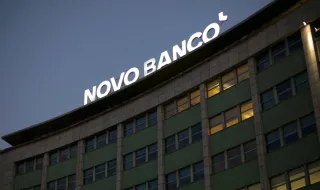
Novo Banco reestrutura dívida de milhões à Alrio
Business

Novo Banco restructures millions in debt to Alrio

Novo Banco reached an agreement with real estate company Alrio to restructure a debt of approximately 35 million euros, without any capital or interest forgiveness. The understanding was reached between the two parties, allowing Alrio to renegotiate the terms of debt repayment with the banking institution.

SIC Notícias31/08/26, 20:06
Business

Carlos Correia de Barros is the new CEO of cement company Secil

Carlos Correia de Barros has been appointed the new CEO of Secil, a Portuguese cement company that was acquired by the Spanish Cementos Molins from Semapa in March for 1.4 million euros. With over a decade at the company and as a board member since 2020, Barros served as chief financial officer over the past five years, and viewed this moment as an opportunity to combine Secil's nearly century-long history with the ambition of an international organization.

Eco31/08/26, 19:56
Business

Clan opens recruitment process for school canteens in 10 regions of the country

Clan announced a large-scale recruitment process for the collective catering sector, aiming to fill vacancies in school canteens for the next school year. The opportunities are distributed across 10 regions of the country, including Lisbon, Porto, Braga, Santarém, Setúbal, Beja, Faro, Leiria, Évora and the island of Madeira. The company is looking for cooks and canteen assistants, valuing candidates with experience in the catering sector, a sense of responsibility and the ability to work in a team. With more than 30 years of experience in the market, Clan reinforces its leadership position in the sector, ensuring the functioning of school catering services throughout the national territory.

Jornal Económico31/08/26, 19:56
Business

STPT demands reinvestment of Altice's surplus value in salaries and blocks early departures

The Union of Workers of the Altice Group in Portugal (STPT) defended that the company should distribute productivity gains with workers through salary increases, performance bonuses and compensations, demanding an end to the early departures of experienced workers. The union considers that salaries at Altice Portugal remain below the European average and proposes a professional valorization strategy with continuous training in areas such as artificial intelligence and cybersecurity, merit-based careers and flexible schedules. The union structure emphasizes that negotiations should be based on concrete economic indicators, such as inflation and financial performance, but warns that demanding increases disconnected from the company's reality is not sustainable.

Jornal Económico31/08/26, 19:50