"They will not respect the borders": whoever knows warns of a serious risk from AIPhoto by Laura Oliveira on Pexels
AI News

"They will not respect the borders": whoever knows warns of a serious risk from AI

CNN Portugal31 August 2026 at 15:37

The Governor of the Bank of England sent a letter to G20 countries warning about the serious risks of artificial intelligence. The alert highlights that AI represents a threat that transcends national borders and that countries need to be prepared to deal with this reality.

The central message of the warning is that "they will not respect the borders", referring to artificial intelligence systems and their potential impacts beyond national jurisdictions. This indicates a concern with the technology's ability to operate cross-border, potentially escaping the regulatory control of individual countries.

The alert was directed specifically to G20 members, the group that brings together the world's largest economies. This suggests that AI governance requires international coordination and a coordinated response among major nations.

This warning is part of a broader movement by financial and economic leaders seeking to draw attention to the challenges that artificial intelligence poses for global economic stability and the urgent need to establish international standards for its regulation.

Related articles

AI News

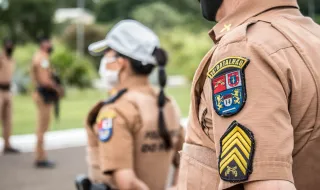
AI assists police in solving 1.8 thousand cases in Paraná

Paraná's Secretariat of Public Security artificial intelligence platform assisted in solving 1,885 cases since December 2025, also contributing to 1,300 arrests and recovery of 557 vehicles. A survey by LCA Consultoria compared the Paraná program with São Paulo's, showing that, per camera installed, the Paraná system is 21 times more effective in capturing fugitives, 43 times in arrests in the act, and 108 times in vehicle recovery, operating with 972 cameras compared to São Paulo's 20 thousand.

oglobo01/09/26, 00:11
AI News

AI and My Privacy

For over a decade, social media taught brands, entities and the State to build detailed profiles of each person, but artificial intelligence has eliminated the technical limits that previously existed. An AI system can simultaneously analyze language, behavior patterns, activity hours, images and even the emotional tone of messages, creating an almost complete reconstruction of who we are. The real risk is not in the technology itself, but in who uses it without effective regulation, in a grey space where data analysis companies and third-party platforms operate without supervision. When unknown entities can predict behaviors, influence political decisions or manipulate perceptions on a large scale, the functioning of markets and democracy is compromised. Portugal and the European Union have taken steps with the AI Act, but regulation always arrives after innovation. The response must be legislative, cultural and business-oriented, making ethics in data use a real competitive advantage.

Jornal Económico01/09/26, 00:08
Há pessoas a filmar cada movimento do seu dia. Tudo para ensinar robôs a agir como humanos
AI News

There are people filming every movement of your day. All to teach robots to act like humans

Thousands of people in India are recording videos of their daily activities to train humanoid robots through artificial intelligence, collecting visual data that allows machines to learn to perform domestic tasks and other functions currently performed by humans. This phenomenon is part of a growing effort to develop robots capable of interacting with the physical world in a similar way to humans, using real human behavior data as the basis for their training.

SAPO Notícias31/08/26, 21:05
AI News

New AI models threaten world economy, warns Bailey

Bank of England Governor Andrew Bailey warned that new artificial intelligence models represent a threat to the world economy. In his article, Bailey argued that authorities must strengthen cybersecurity and implement stricter prevention measures to correct vulnerabilities that could seriously affect the global economic system.

Euronews Portugal31/08/26, 16:32