The sudden floods that hit Nepal following the collapse of a glacier and a massive avalanche of ice, rock and mud on 26 August could cause over one billion dollars in insured losses, with a significant portion of the bill falling on the international reinsurance market. The consultancy and rating agency AM Best considers, however, that the aggregate impact on the Nepalese insurance market should be limited given the scale of economic losses, due to low insurance penetration in the country. The insured exposure is mainly concentrated in hydropower production assets, engineering and construction projects associated with infrastructure and commercial properties.
The hydropower sector is one of the main concerns. The floods damaged 13 hydropower projects, representing approximately 748 MW of capacity, causing a strong negative reaction on the Nepalese Stock Exchange, with the insurance index falling 3.90% after the disaster. Aon estimated that initial damage to roads and bridges alone amounts to approximately 15 billion Nepalese rupees, equivalent to 157 million dollars. The Nepalese Finance Minister estimated reconstruction needs at 4 to 5 billion dollars, a value equivalent to approximately 10% of the country's economy.
The Nepalese market depends heavily on international reinsurers' capacity to cover catastrophic risks, so AM Best anticipates that a substantial portion of insured losses will be transferred abroad. The InsuranceAsia News analysis therefore points to a potentially more relevant impact on global reinsurers' balance sheets than on the Nepalese insurers themselves.
In addition to major industrial and infrastructure risks, travel insurers face a second front of exposure. Hundreds of foreign tourists and pilgrims were in the region when the catastrophe occurred, and many remain missing. AM Best anticipates an increase in travel insurance claims, particularly for cancellation or interruption, and the event could test the coverage limits of some policies, especially regarding search, rescue, evacuation and assistance expenses.
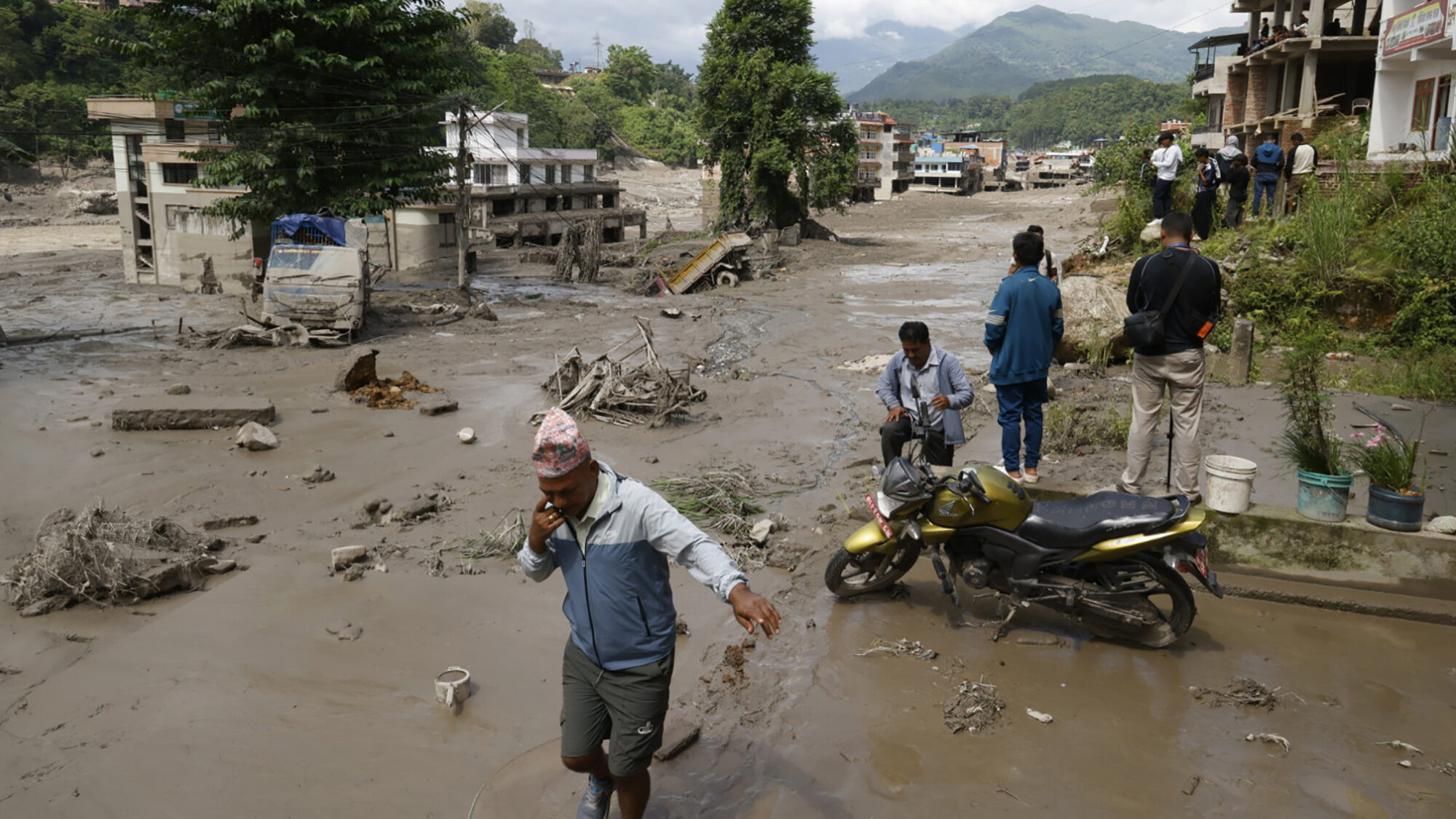
As cheias repentinas que atingiram o Nepal na sequência do colapso de um glaciar e de uma enorme avalanche de gelo, rocha e lama poderão provocar mais de mil milhões de dólares (cerca de 860 milhões de euros) em perdas seguradas, com uma parte significativa da fatura a recair sobre o mercado internacional de resseguro. A estimativa, avançada pela InsuranceAsia News, surge numa altura em que ainda estão a ser avaliados os danos provocados pelo desastre de 26 de agosto.
A consultora e agência de rating AM Best considera, contudo, que o impacto agregado sobre o mercado segurador nepalês deverá ser limitado face à dimensão das perdas económicas, devido à reduzida penetração do seguro no país. A agência de rating salienta que a exposição segurada está sobretudo concentrada em ativos de produção hidroelétrica, projetos de engenharia e construção associados a infraestruturas e propriedades comerciais ao longo do corredor comercial afetado pelas cheias.
É precisamente nos grandes riscos empresariais que a dimensão dos sinistros poderá tornar-se significativa. O mercado nepalês depende fortemente da capacidade de resseguradores internacionais para cobrir riscos catastróficos, pelo que a AM Best antecipa que uma parcela substancial das perdas seguradas será transferida para o exterior. A análise da InsuranceAsia News aponta, assim, para um impacto potencialmente mais relevante nos balanços dos resseguradores globais do que nas próprias seguradoras nepalesas.
Hidroelétricas concentram grande parte da exposição
O setor hidroelétrico é uma das principais preocupações para o mercado segurador. As cheias danificaram 13 projetos hidroelétricos, representando cerca de 748 MW de capacidade, provocando também uma forte reação negativa das ações das seguradoras e das empresas de energia na Bolsa nepalesa. O índice das seguradoras chegou a cair 3,90% após o desastre, refletindo a expectativa de indemnizações elevadas.
Os danos não se limitam às centrais elétricas. A Aon estimou que apenas os prejuízos iniciais em estradas e pontes ascendem a cerca de 15 mil milhões de rupias nepalesas, equivalentes a 157 milhões de dólares, com as perdas materiais totais ainda em avaliação. O corretor considera que o custo económico global das cheias deverá atingir várias centenas de milhões de dólares.
A dimensão da reconstrução poderá, no entanto, ser bastante superior à parcela coberta por seguros. O ministro das Finanças do Nepal estimou em 4 a 5 mil milhões de dólares as necessidades de reconstrução, valor equivalente a cerca de 10% da economia do país. A estimativa inclui estradas, pontes, infraestruturas energéticas, edifícios e outras estruturas destruídas pelas cheias e pelos movimentos de massa.
Seguros de viagem também deverão sentir impacto
Além dos grandes riscos industriais e de infraestrutura, as seguradoras de viagem enfrentam uma segunda frente de exposição. Centenas de turistas e peregrinos estrangeiros encontravam-se na região quando ocorreu a catástrofe, e muitos continuam desaparecidos. A destruição de estradas e da passagem fronteiriça entre o Nepal e o Tibete está a complicar as operações de busca, assistência e eventual repatriamento.
A AM Best antecipa um aumento dos sinistros relacionados com seguros de viagem, nomeadamente por cancelamento ou interrupção de viagens. O evento poderá também testar os limites de cobertura de algumas apólices, sobretudo relativamente a despesas de busca, salvamento, evacuação e assistência quando não existe uma emergência médica convencional.