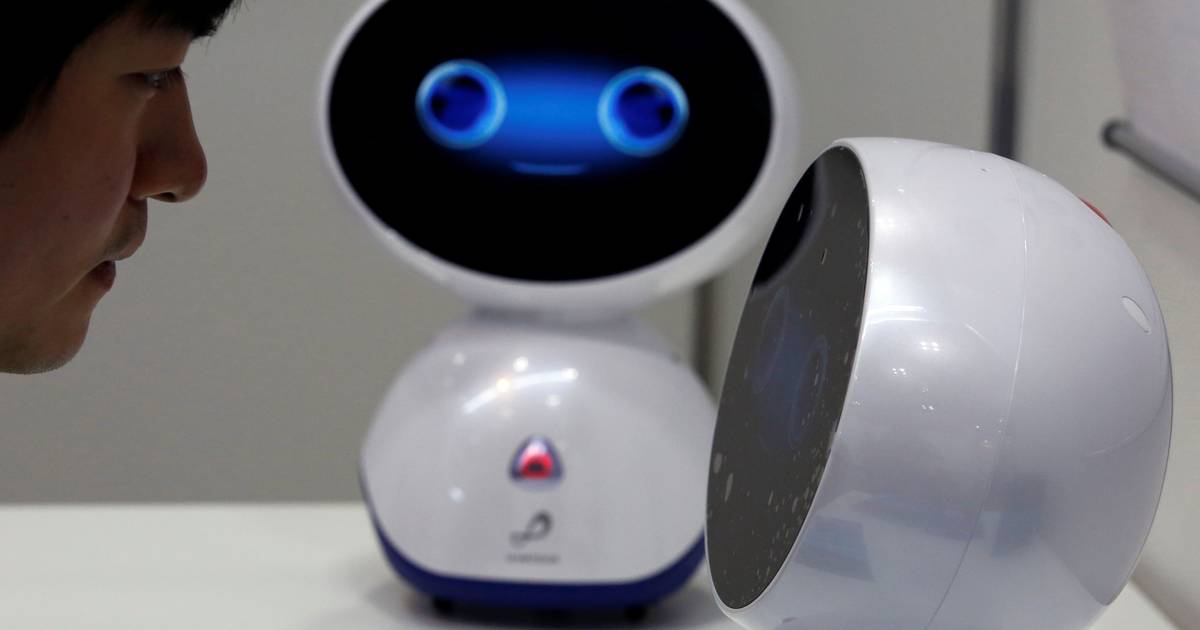
Chinese scientists develop AI robots to help treat depression
Science

Chinese scientists develop AI robots to help treat depression

SIC Notícias30 August 2026 at 12:00

Chinese scientists have developed robots equipped with artificial intelligence to assist in treating depression. This research represents a significant advance in the field of mental health, using cutting-edge technologies to improve the diagnosis and monitoring of patients with depressive disorders.

A specific researcher developed an innovative depression screening system. This system combines multiple data sources, including electroencephalography (EEG), functional magnetic resonance imaging (fMRI), and information collected through wearable devices.

The results obtained with this system were described as "very good," indicating high effectiveness in identifying and monitoring depression. The integration of different types of biomedical data allows for a more complete and accurate assessment of patients' mental state.

This technology represents a promising approach to treating depression, offering healthcare professionals more sophisticated tools to diagnose and monitor people affected by this mental condition.


Related articles

El brote de ébola en RDC deja ya más de 2.860 muertos y los casos confirmados se aproximan a los 6.000
Science

The Ebola outbreak in DRC already has more than 2,860 dead and confirmed cases approach 6,000

The Ebola outbreak declared in mid-May in the Democratic Republic of Congo (DRC), the deadliest in its recent history, has already caused more than 2,862 deaths and 5,945 confirmed cases across the country, according to the latest report this Sunday, at the end of a week of new spread.

El Periódico Mediterráneo - General30/08/26, 11:46
Science

NASA launches space telescope to probe the great mysteries of the Universe

NASA is preparing to launch the Nancy Grace Roman space telescope, which will be sent into space with the aim of probing the great mysteries of the Universe, expanding human knowledge about the cosmos and astronomical phenomena yet to be explained.

RTP Notícias30/08/26, 11:40
Caso Lindsay Clancy: o que distingue uma depressão pós-parto de uma psicose?
Science

Lindsay Clancy Case: what distinguishes postpartum depression from psychosis?

The article addresses the case of Lindsay Clancy, a North American mother accused of killing her three children, to explain the differences between postpartum depression and postpartum psychosis. Psychotherapist Sónia Soares Coelho clarifies that, while postpartum depression involves depressed mood and loss of interest, postpartum psychosis is a psychiatric emergency characterized by hallucinations, delusions, and disorganized behavior, being much rarer but potentially dangerous. The specialist points out failures in the clinical follow-up of Lindsay Clancy, highlighting the importance of recognizing signs of psychosis to ensure appropriate and timely interventions.

SIC Notícias30/08/26, 11:19
Como um cavalo “psíquico” chamado Hans ensinou a ciência a desconfiar de si própria
Science

How a "psychic" horse named Hans taught science to distrust itself

The article tells the story of the famous horse "Clever Hans," who in the early 20th century appeared to have psychic or telepathic abilities, and who fascinated leading scientists, psychologists, and philosophers of the time, including Nobel laureate J.J. Thomson and philosopher C.D. Broad, who tested mediums and participated in spiritualist séances. The case ultimately demonstrated that Hans did not possess special powers, but rather the ability to interpret subtle changes in human behavior—a lesson that taught the scientific community to be suspicious of its own conclusions and to develop more rigorous methods of investigation.

ZAP Notícias30/08/26, 11:00