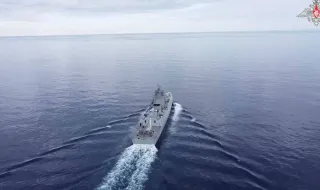
Japan is considering significantly increasing its military spending to 3.5% of Gross Domestic Product over the next ten years, which would allow the country to move from its current tenth position in the world to the group of five largest military powers. According to data from the Stockholm International Peace Research Institute (SIPRI), Japan spent $62.2 billion on defense in 2025, representing 1.4% of GDP. The 3.5% target would be equivalent to approximately €134.5 billion, more than double current levels. The decision has not yet been made, but Japanese officials have reportedly signaled to the United States their willingness for a significant increase.
The reinforcement of Japanese military spending occurs in a context of growing pressure from the United States for allies to take greater responsibility for their own defense. The Donald Trump administration has been pressuring Asian allies to increase their contribution to defense, while Tokyo seeks to respond to China's growing military power and the threat posed by North Korea. The Japanese Ministry of Defense has requested a record budget of 8.9 trillion yen (approximately €51.6 billion) for the 2027 fiscal year, which includes investments in artificial intelligence, drones, and unmanned systems.
The biggest obstacle to the rearmament plan is Japan's high public debt, which approaches twice the size of the economy, being one of the highest among developed countries. Financing costs are rising rapidly, with the ten-year bond yield reaching 3.025%, the highest level in about three decades. Simultaneously, the government of Sanae Takaichi is advancing economic stimulus measures, including reducing the consumption tax on food from 8% to 1%, which will cause an annual loss of revenue of approximately €29 billion.
The Bank of Japan is also raising interest rates to control inflation, which will further aggravate the financing costs of public debt. Economists expect the policy rate to be raised to 1.25%, followed by a trajectory that could take it to 1.75% in the second quarter of 2027. This situation creates a dilemma for Tokyo, which faces pressure from Washington to increase military spending at the same time that markets demand fiscal discipline. The issue becomes even more complex because Japan is discussing not only increasing military spending, but also tax cuts, strategic investment, and financing other public expenditures in an environment of rising interest rates.