All news
Politics
Business
Technology
Incidents
Sports
Weather
Science
Entertainment
World
Real Estate
AI News
Zelesky dismisses attorney general under martial law
Politics
Ukraine

Zelesky dismisses attorney general under martial law

dnoticias.pt14 September 2026 at 21:48

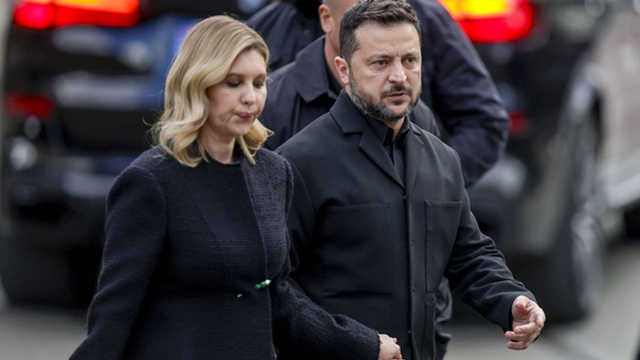
Ukrainian President Volodymyr Zelensky dismissed today Attorney General Ruslan Kravchenko through a presidential decree published on the presidential website. The resignation was carried out under the legal regime of martial law, which has been in force in Ukraine since the beginning of the Russian invasion on February 24.

Kravchenko had previously submitted his resignation, following suspicions of corruption involving members of his team. The decree specifically refers to the suspension of Ruslan Andriyovych Kravchenko from the position of attorney general.

The dismissal falls within a broader context of anti-corruption efforts in Ukraine, which has been scrutinized by the country's Western allies, especially regarding the use of military and economic aid funds sent since the beginning of the war.
Why this matters

This dismissal directly affects the Ukrainian judicial system at a critical moment of war, when the country operates under martial law. The resignation follows suspicions of corruption in the prosecutor's team, which may have implications for public trust in institutions during the conflict. The action occurs while Ukraine continues to defend itself from the Russian invasion.

About this summary

This is our short summary of a report published by dnoticias.pt on 14 September 2026 at 21:48; the full text stays with the publisher. In our feed it sits under Politics. We currently carry 29870 items in that section.

All items in this section →
Source

Related articles

Politics

Mozambique and Portugal discuss Defense cooperation

Mozambique and Portugal are working on a new version of the framework agreement for cooperation in the area of Defense, during a visit by the Mozambican Minister of National Defense to Lisbon. The future of the European Union military mission in Mozambique was also under discussion between the two countries.

Observador14/09/26, 22:45
Politics

Moraes-Vorcaro Case: what is at stake at the STF and who speaks first in the session

Supreme Federal Court (STF) ministers are expected to decide in this session on the possible opening of an investigation against Justice Alexandre de Moraes, related to the case involving his daughter's money. The session has generated expectations behind the scenes, with doubts about how the trial will be conducted and who will have the opening word in the discussions. The case raises questions about the internal functioning of the court and the investigation procedures involving its own members.

BBC News Brasil14/09/26, 22:37
Augusto Cury desmentido por universidade após apresentar-se como professor de pós-graduação em plena campanha eleitoral
Politics

Augusto Cury Denied by University After Presenting Himself as Graduate Professor During Electoral Campaign

The University of São Paulo denied writer Augusto Cury after he presented himself as a graduate professor during the electoral campaign. The writer, known for self-help books, allegedly used this academic title in electoral contexts, but USP confirmed that he has no affiliation as a professor at the institution. Cury's press office did not provide clarification on the case at the time of publication.

Correio da Manhã14/09/26, 22:32
Politics

The politicians we have

A study by the Francisco Manuel dos Santos Foundation analyzed the profiles of all Portuguese ministers between 1976 and 2025, concluding that Portugal has higher levels of specialization than Spain, Italy, and Greece. The most frequent profile is that of the "political-specialist" (38%), and 31% of ministers are experts — the highest percentage among the four Southern European countries. Although parties continue to dominate appointments, approximately 70% of ministers have higher education and 78% have professional experience related to the portfolio they oversee. The study also found that women tend to require more technical profiles to access Government, and that portfolios such as Foreign Affairs maintain greater party control, while areas such as Energy or Environment welcome more specialists.

oRegiões14/09/26, 22:30