All news
Politics
Business
Technology
Incidents
Sports
Weather
Science
Entertainment
World
Real Estate
AI News
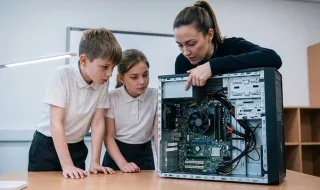
Technology and digital inclusion: bringing together or isolating the elderly?Photo by Icsilviu on Pexels
Technology
Investments

Technology and digital inclusion: bringing together or isolating the elderly?

Mais Semanário14 September 2026 at 16:43

We live in an increasingly technological society, where many daily tasks depend on the use of the Internet, such as scheduling medical appointments, carrying out banking operations, communicating with family members and accessing public services. However, not everyone keeps pace with this evolution at the same rate. Among the elderly, a lack of digital knowledge can contribute to a new form of exclusion and social isolation.

Digital exclusion does not only mean not knowing how to use a computer or a mobile phone. Often, it means relying on other people to carry out basic tasks and feeling difficulty in fully participating in society. When services become almost exclusively digital, those who do not have technological skills may feel left out, frustrated or unable to cope.

On the other hand, technology can also be an important tool for bringing people together. Video calls allow grandparents and grandchildren to stay in touch, social networks facilitate communication with friends and family, and applications can help combat loneliness. For many elderly people, learning to use these tools represents a way to gain greater autonomy and confidence. It is important that technology teaching is adapted to the needs of the elderly, with patience, simple language and adequate support.

Digital inclusion should not mean forcing all elderly people to use technology, and it is essential to respect their choices and maintain in-person and accessible alternatives. Technology should serve people and not create new barriers. Promoting digital literacy in the elderly is a responsibility of society as a whole to ensure that no one is left behind. The article was written by Rita Silva, a psychologist at the Santa Cristina de Malta Social Solidarity Association.

Why this matters

Readers who have elderly family members directly face the challenges described: scheduling medical appointments, accessing banking services or communicating at a distance increasingly depends on digital skills. The article warns that digitalisation without alternatives can exclude those who have the most difficulties, affecting the autonomy and well-being of older people. Promoting digital inclusion in the elderly is a responsibility that begins in families.

About this summary

This is our short summary of a report published by Mais Semanário on 14 September 2026 at 16:43; the full text stays with the publisher. In our feed it sits under Technology. We currently carry 4434 items in that section.

All items in this section →
Source

Related articles

Porquê agora as preocupações com a IA? O Negócios explica
Technology

Why the AI concerns now? O Negócios explains

Various voices within the leading artificial intelligence companies themselves have recently expressed concern about the new technology and called for a slowdown in development, with their words already reflecting on the share prices of these listed companies. Rui da Rocha Ferreira, coordinator of Negócios online, explains what is happening and what the implications are for the sector.

Jornal de Negócios14/09/26, 17:32
Technology

Students from Coimbra create an "assistant" that helps teachers in their daily lives

Students from the School of Education of the Polytechnic Institute of Coimbra created a technological "assistant" to support teachers in their daily tasks, which will be presented at the national final of the 12th edition of an innovation contest. The project aims to simplify teachers' routines through digital tools.

Notícias de Coimbra14/09/26, 17:14
Technology

Quantum Economics: When the Rules of Linear Economics Stop Working (Part I)

The article presents the concept of "Quantum Economics", a new economic paradigm in which intelligence, technology and capital can be scaled independently of labor and organizational size, where multiple possibilities coexist, new forms of abundance and scarcity, and less linear relationships between resources, production and value. The author identifies four fundamental transformations: the separation between production and work made possible by AI and robotics, intelligence as a scalable production factor, the inversion of the logic of deciding before executing to experimenting before deciding, and the coexistence of extreme abundance with new forms of scarcity. The convergence between AI, quantum technologies, biotechnology and digital infrastructures is presented as the multiplier that enables and accelerates these breaks in traditional economic relations.

Jornal Económico14/09/26, 17:05
Technology

iPhone 18 Pro or Pro Max? These are the differences you should consider before buying

The pre-orders for iPhone 18 Pro and Pro Max started on September 12, with availability in stores from the 18th. With cameras, chip and features practically identical, the two top-of-the-line models from Apple differ mainly in screen size, battery capacity and price, factors that should guide consumers' purchasing decision.

SAPO Tek14/09/26, 17:03