All news
Politics
Business
Technology
Incidents
Sports
Weather
Science
Entertainment
World
Real Estate
AI News
Who governs Portugal? What nearly 50 years of democracy reveal about who becomes a ministerPhoto by klimkin on Pexels
Politics

Who governs Portugal? What nearly 50 years of democracy reveal about who becomes a minister

SOL14 September 2026 at 08:27

The central question of the article is to understand who governs Portugal and what factors weigh most heavily in the choice of a minister: political experience, technical competence or proximity to parties. The question arises in the context of nearly 50 years of Portuguese democracy, since 1976.

The article mentions a study that analysed all ministers from 1976 to the present, seeking to identify patterns in the recruitment of the Portuguese governmental elite and how these have changed over the decades.

The study reveals significant changes in how governments are formed, suggesting that the profile of ministers and selection criteria have not remained stable over time. These changes reflect broader transformations in the political system and Portuguese society.

The research thus seeks to uncover the unwritten rules that determine who becomes a minister in Portugal, contributing to a better understanding of the dynamics of national executive power.

Why this matters

Portuguese readers can better understand how the governments they elect are formed and what policies affect them daily. The analysis reveals that minister selection criteria have changed over the decades, which may explain different governance outcomes and the relationship between parties, competence and power. This study follows decades of democratic governments and allows reflection on the quality of representative democracy in Portugal.

About this summary

This is our short summary of a report published by SOL on 14 September 2026 at 08:27; the full text stays with the publisher. In our feed it sits under Politics. We currently carry 29435 items in that section.

All items in this section →
Source

Related articles

Politics

Minister says workers "don't want" to go back

Minister António Leitão Amaro stated that workers at the Portuguese news agency do not want to go back on governance rules, contradicting the demonstrations they have been holding in the opposite direction. This declaration comes in the context of a labor conflict between the news agency's management and its employees.

Observador14/09/26, 13:09
Politics

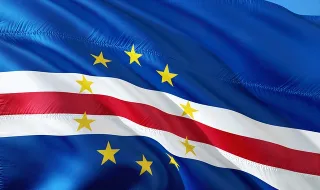
José Maria Neves announces re-candidacy for Cape Verde

The President of the Republic of Cape Verde, José Maria Neves, officially announced his re-candidacy for a second term. First elected in 2021, Neves now seeks to ensure continuity of his mandate leading the country.

Observador14/09/26, 13:09
Politics

In a country of "stalemates", IL accuses Government of "buying votes"

Mário Amorim Lopes, from Iniciativa Liberal, considered that Portugal is currently paralyzed by a "majority of stalemates" that prevents the approval of structural reforms, accusing the Government of "effectively stalling" the country and of trying to "buy votes" from opposition parties in the censure motion that will be debated.

Observador14/09/26, 13:03
Dois terços das escolas afetadas por falta de professores, revela inquérito da Fenprof
Politics

Two-thirds of schools affected by teacher shortage, Fenprof survey reveals

A Fenprof survey reveals that two-thirds of schools in Portugal are affected by a lack of teachers, with one-third of school management teams anticipating significant difficulties for the academic year now beginning. The shortage of teachers continues to be a structural problem in the Portuguese education system, affecting the quality of teaching and the organization of schools.

Correio da Manhã14/09/26, 13:02