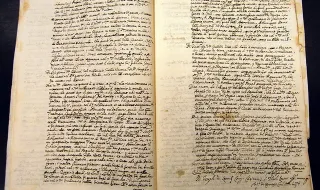
The story of Shadrack Byfield, a British soldier who fought in the War of 1812 between the United Kingdom and the United States, is being re-evaluated thanks to the discovery of a forgotten 19th-century autobiography. The document reveals that Byfield was not just a soldier who faced an amputation with courage, but also a man marked by chronic pain, financial difficulties, and a long struggle for veterans' rights.
The article describes that Byfield reportedly buried his arm after the amputation and later fabricated a prosthetic so he could continue working. For decades, his story was told as that of a stoic soldier who faced adversity without complaint.
However, the new data found in the autobiography reveals a reality different from the traditional narrative. The autobiography shows that Byfield faced enormous challenges throughout his life, including persistent health problems and economic difficulties.
The discovery of this document now allows for a more complete and human re-evaluation of this veteran's life, showing that beyond military courage, Byfield fought for decades for recognition of his rights as a soldier wounded in combat.