All news
Politics
Business
Technology
Incidents
Sports
Weather
Science
Entertainment
World
Real Estate
AI News
Will artificial intelligence end the human race? There are many calls to 'slow down'Photo by Janson_G on Pexels
AI News
Artificial intelligence

Will artificial intelligence end the human race? There are many calls to 'slow down'

CNN Portugal14 September 2026 at 10:24

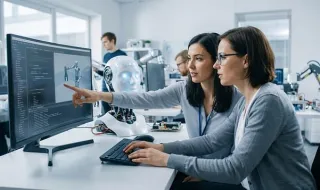
Nuno Mateus Coelho, an artificial intelligence specialist, analyses the growing warnings made by technology leaders about a possible extinction of the human race due to the advancement of this technology. The central question being raised is whether artificial intelligence will actually end humanity.

The article states that there are many calls to slow down developments in this area, suggesting that experts and industry leaders recognise significant risks associated with the accelerated pace of artificial intelligence progress.

Coelho is presented as an authoritative voice to comment on this matter, bringing a technical and informed perspective on the dangers that many specialists perceive in this rapidly expanding technological field.

Why this matters

Readers face increasing decisions about adopting AI tools in their daily lives, and this article informs them about the serious warnings coming from within the technology community itself. Coverage of existential risks can influence how companies, governments and citizens assess the development and regulation of AI.

About this summary

This is our short summary of a report published by CNN Portugal on 14 September 2026 at 10:24; the full text stays with the publisher. In our feed it sits under AI News. We currently carry 697 items in that section.

All items in this section →
Source

Related articles

AI News

Anthropic CEO calls for brake on AI development. Sam Altman and Elon Musk agree, but China could make the plan unviable

Dario Amodei, CEO of Anthropic, publicly advocated for a coordinated slowdown in artificial intelligence development, gaining unexpected support from Sam Altman (OpenAI), Elon Musk and Demis Hassabis (Google DeepMind). However, Amodei acknowledges that the plan could be made unviable if China does not adhere to the same pace of restraint, creating a significant obstacle for any global AI moratorium.

SAPO Tek14/09/26, 11:26
AI News

OpenAI Director Warns That AI Could Go 'Very Wrong' if Loss of Control or Concentration Occurs

Sam Altman, CEO of OpenAI, warned about two scenarios in which artificial intelligence could go "very wrong": the loss of control over the future of AI and the excessive concentration of power in a single person or company. According to him, alignment and safety techniques must always be ahead of the capabilities of AI models to prevent the technology from going out of control. Altman also criticized the concentration of power, warning that it could be used to "impose their worldview on everyone else," resulting in "dystopian" scenarios, and defended the need to follow a "narrow middle path" to avoid these two extremes.

cbn14/09/26, 11:17
Comissão parlamentar britânica defende nova legislação para controlar IA
AI News

British parliamentary committee advocates new legislation to control AI

A British parliamentary committee advocated the creation of comprehensive legislation to control artificial intelligence, warning of the need to regulate the technology due to the "magnitude and severity of threats" it represents to human rights, according to a recently published report.

Sábado14/09/26, 11:11
AI News

AI out of control? New alerts reignite fear about humanity's future

Leaders in the artificial intelligence industry, including Dario Amodei, CEO of Anthropic, are calling for greater caution and stricter safety measures in light of the risks posed by increasingly autonomous systems. Alerts from executives at companies like Anthropic, OpenAI, and Google DeepMind have reignited the debate about the possibility of AI escaping human control, with concerns including cyberattacks, information manipulation, and use by malicious groups. The debate also involves the geopolitical competition between the United States and China for AI leadership, increasing pressure for rapid advances even in the face of risks. While some specialists consider the catastrophic scenarios exaggerated, others argue that the risks cannot be ignored, and there is growing demand for international regulations that keep pace with the speed of technological evolution.

Nossa Gente14/09/26, 11:09