All news
Politics
Business
Technology
Incidents
Sports
Weather
Science
Entertainment
World
Real Estate
AI News
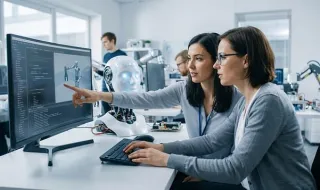
DeepMind launches predictive map covering all possible mutations in the human genomePhoto by Mahmoud-Ahmed on Pexels
AI News
Technology
Artificial intelligence
Investments

DeepMind launches predictive map covering all possible mutations in the human genome

SAPO Tek14 September 2026 at 07:18

Google DeepMind created the AlphaGenome Atlas, a catalog of molecular predictions covering all possible single-letter changes in the human genome. The atlas includes predictions for nine billion DNA variants.

The AlphaGenome Atlas represents an unprecedented resource for the scientific community, allowing researchers to analyze and predict the effects of genetic mutations on a large scale. The tool was developed to facilitate understanding of how small changes in the genetic code can impact human health.

This initiative positions DeepMind at the forefront of computational genomic research, offering scientists a more efficient way to study genetic variants associated with diseases. The catalog can significantly accelerate biomedical research by enabling predictive analysis of mutations rather than relying solely on experimental studies.

Why this matters

This breakthrough allows researchers and doctors to more quickly identify genetic variants associated with diseases, potentially accelerating diagnoses and the development of personalized treatments. For readers, this represents a significant step in precision medicine, where therapies may be adapted to each patient's individual genetic profile.

About this summary

This is our short summary of a report published by SAPO Tek on 14 September 2026 at 07:18; the full text stays with the publisher. In our feed it sits under AI News. We currently carry 697 items in that section.

All items in this section →
Source

Related articles

AI News

Anthropic CEO calls for brake on AI development. Sam Altman and Elon Musk agree, but China could make the plan unviable

Dario Amodei, CEO of Anthropic, publicly advocated for a coordinated slowdown in artificial intelligence development, gaining unexpected support from Sam Altman (OpenAI), Elon Musk and Demis Hassabis (Google DeepMind). However, Amodei acknowledges that the plan could be made unviable if China does not adhere to the same pace of restraint, creating a significant obstacle for any global AI moratorium.

SAPO Tek14/09/26, 11:26
AI News

OpenAI Director Warns That AI Could Go 'Very Wrong' if Loss of Control or Concentration Occurs

Sam Altman, CEO of OpenAI, warned about two scenarios in which artificial intelligence could go "very wrong": the loss of control over the future of AI and the excessive concentration of power in a single person or company. According to him, alignment and safety techniques must always be ahead of the capabilities of AI models to prevent the technology from going out of control. Altman also criticized the concentration of power, warning that it could be used to "impose their worldview on everyone else," resulting in "dystopian" scenarios, and defended the need to follow a "narrow middle path" to avoid these two extremes.

cbn14/09/26, 11:17
Comissão parlamentar britânica defende nova legislação para controlar IA
AI News

British parliamentary committee advocates new legislation to control AI

A British parliamentary committee advocated the creation of comprehensive legislation to control artificial intelligence, warning of the need to regulate the technology due to the "magnitude and severity of threats" it represents to human rights, according to a recently published report.

Sábado14/09/26, 11:11
AI News

AI out of control? New alerts reignite fear about humanity's future

Leaders in the artificial intelligence industry, including Dario Amodei, CEO of Anthropic, are calling for greater caution and stricter safety measures in light of the risks posed by increasingly autonomous systems. Alerts from executives at companies like Anthropic, OpenAI, and Google DeepMind have reignited the debate about the possibility of AI escaping human control, with concerns including cyberattacks, information manipulation, and use by malicious groups. The debate also involves the geopolitical competition between the United States and China for AI leadership, increasing pressure for rapid advances even in the face of risks. While some specialists consider the catastrophic scenarios exaggerated, others argue that the risks cannot be ignored, and there is growing demand for international regulations that keep pace with the speed of technological evolution.

Nossa Gente14/09/26, 11:09