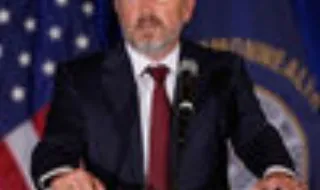
The Minister of Internal Administration, Luís Neves, was heard before the Committee on Constitutional Affairs, Rights, Freedoms and Guarantees, rejecting the calls for resignation coming from the opposition. "I maintain confidence in myself to continue in the office," he stated, also ensuring he has the support of the Prime Minister, Luís Montenegro. The hearing took place weeks after growing political pressure on the former national director of the Judicial Police, marked by several investigations related to decisions made during his tenure leading that criminal police body.
The doubts raised by deputies included the transfer of an impounded trailer to facilities of a company with contracts with the PJ, the works carried out on Neves's property in Odemira, and his declarations of assets and income. Deputy Rui Rocha, from the Liberal Initiative, was particularly incisive in questioning the minister's relationship with the owner of Construbarcelos, a company that carried out work at Neves's residence and had contracts with the PJ. The minister admitted that "I should never have allowed this person to do renovations at my house," but rejected any favoritism.
Chega was the most straightforward party in demanding resignation, with Deputy Pedro Pinto asking "When are you going to leave?" The PSD closed ranks around Neves, with António Rodrigues considering the accusations "lamentable" and classifying them as "attempts to drag him through the mud." The PS chose not to directly request his departure, but placed the responsibility on Montenegro, questioning whether the level of controversy is compatible with leading such a sensitive area. The hearing ended without the resignation demanded by the opposition, but also without the political doubts being closed.
The hearing took place hours before the debate and vote on a motion of censure presented by Chega against the Government of Luís Montenegro. Over several hours, Neves sought to present himself as a government official focused on action, highlighting results such as the reinforcement of recruitment in the PSP, the implementation of biometric systems at airports, and the reduction of burned area in rural fires. In the end, he stated he was "absolutely comfortable with everything I have done," acknowledging that some decisions may come to be considered wrong, but rejecting that they were made for his personal benefit.