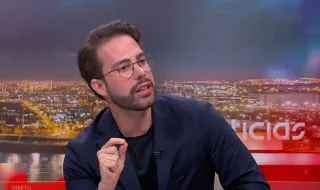
Álvaro Santos Pereira, Governor of the Bank of Portugal and former Minister of Economy and Employment, alerted to the impact of Artificial Intelligence on education, highlighting that recent trends should be a cause for concern and should prompt policymakers to take action. This warning was issued through a post on LinkedIn, on the day the Organisation for Economic Co-operation and Development (OECD) released this year's edition of PISA.
The PISA results show that student performance, including Portuguese students, has deteriorated again, especially in Mathematics and Reading. The largest decline in performance occurred in Reading, which Santos Pereira comments is not particularly surprising, considering that "digital distractions" have become ubiquitous. Performance was already declining before the pandemic and the spread of AI, which shows there are structural problems to be addressed.
In Portugal, in Mathematics and Reading, the average student score is already below what was observed at the beginning of the millennium, having reversed the gains accumulated over the past two decades. In Science, the decline was less pronounced, but one must go back to 2006 to find a worse result. Portugal is not alone, as student performance across OECD countries has worsened again and reached the lowest levels ever recorded in Mathematics and Reading, with one in five 15-year-old students having low performance in all three domains.
Santos Pereira acknowledges that these trends are not new, but warns that, if nothing is done, technology will likely reinforce them. "The coming years will be crucial to reverse these worrying trends," stated the economist, highlighting that the challenge for policymakers is not simply to recover lost ground, but to ensure that schools meet the demands of a rapidly changing world.