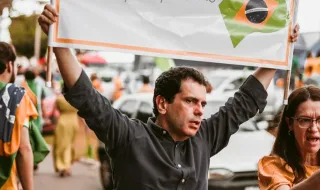
Yellow September: psychologist Rodrigo Toledo analyzes pros and controversies of the campaignPhoto by Matheus Bertelli on Pexels
World
Образование
Инвестиции
Космос
Coimbra

Yellow September: psychologist Rodrigo Toledo analyzes pros and controversies of the campaign

oglobo3 September 2026 at 21:00

The Yellow September campaign returns every year in September, occupying social media, companies, schools, offices, and institutional campaigns. The goal is to expand the conversation about suicide prevention, reduce stigma, and encourage people to seek help. According to data from ABP (Brazilian Psychiatric Association) and CFM (Federal Council of Medicine), Brazil records approximately 14 thousand suicides annually, more than 38 cases per day. Epidemiological bulletins from the Ministry of Health, based on SIM (Mortality Information System) from DATASUS, indicate consolidated numbers between 14,000 and 15,500 annual deaths, after adjustments for underreporting.

Psychologist Rodrigo Toledo analyzes the pros and controversies of the campaign. In recent years, another conversation has also gained space: professionals, researchers, bereaved people, and groups that question not the prevention itself, but the way Yellow September has come to be conducted. The article indicates that part of the criticism does not question the need for prevention, but rather the methods used by the campaign.

Related articles

World

JD Vance confirms the USA is investigating a wedding attack in Iran that killed several people

The Vice President of the United States, JD Vance, confirmed that the USA is investigating the aerial attack that reportedly hit a wedding party in the city of Sirik, in Iran, causing several deaths. Vance did not specify what US actions would be if the information is confirmed as true. Iran claims the attack targeted civilians during a wedding celebration.

SIC Notícias04/09/26, 00:23
A ética do desenrascanço
World

The ethics of desenrascanço

The article explores the difference between ethics and law, defining ethics as the set of values and principles that guide human behavior, and law as the set of norms that allow life in society. The text highlights that, although related, these two dimensions do not always align, raising questions about the tension between what is morally correct and what is legally permitted.

SAPO Notícias04/09/26, 00:17
World

Brazil, the election we feel

The article analyzes the unique closeness between Portugal and Brazil, highlighting that the Brazilian election on October 4 is followed in Portugal as a "domestic drama," not just as international news. With 574,000 Brazilians living in Portugal and significant investments by Portuguese companies such as Galp, EDP, and Mota-Engil in Brazil, the electoral result will have a direct impact on exchange rates, concessions, and Portuguese economic confidence. The article also notes that Lula tends to view Portugal as a strategic partner, while Bolsonaroism seeks validation in Washington, and warns that the next Brazilian president will also influence the future of Mercosur and Portuguese exports' access to the South American market.

Jornal Económico04/09/26, 00:14
World

Five years after Kabul, Afghanistan continues to wait

Five years after the Taliban seized Kabul in August 2021, Afghanistan remains largely absent from international scrutiny, despite the profound consequences of the Western withdrawal. The country continues to be the only one where women and girls are excluded from education, with 2.4 million prevented from studying, and faces a humanitarian crisis with more than 22 million people needing assistance. The article argues that the West's military intervention failed not only in its execution but in building institutions that could survive its departure, and that Western responsibility did not end with the troop withdrawal. It advocates for diplomatic engagement without legitimizing the Taliban regime, humanitarian and civil society support, ensuring educational opportunities for girls, while acknowledging that Afghanistan's future must be decided by Afghans themselves.

Jornal Económico04/09/26, 00:13