Without nature, there is no survivalPhoto by Lucca Belliboni on Pexels
World
Климат

Without nature, there is no survival

Público3 September 2026 at 08:05

The article "Without nature, there is no survival" is an opinion piece written by Isabel Marques. The author addresses the contradiction between discussing environmental issues and the continuation of human actions that transform the natural world.

Marques highlights that while society debates and discusses topics related to the environment and climate, people simultaneously continue to alter the planet. This dissonance between discourse and action is pointed out as a fundamental problem.

The author suggests that the essential failure lies in not recognizing that climate change is not an isolated problem, but something that affects and is connected to multiple other systems and aspects of life on Earth. Nature is presented as an indispensable element for human survival.

The article calls for deeper reflection on the relationship between humanity and the environment, questioning whether current discussions are sufficient to produce effective changes.

Related articles

World

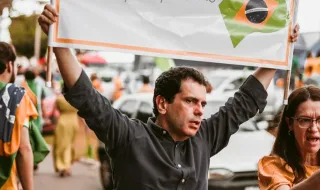
Brazil, the election we feel

The article analyzes the unique closeness between Portugal and Brazil, highlighting that the Brazilian election on October 4 is followed in Portugal as a "domestic drama," not just as international news. With 574,000 Brazilians living in Portugal and significant investments by Portuguese companies such as Galp, EDP, and Mota-Engil in Brazil, the electoral result will have a direct impact on exchange rates, concessions, and Portuguese economic confidence. The article also notes that Lula tends to view Portugal as a strategic partner, while Bolsonaroism seeks validation in Washington, and warns that the next Brazilian president will also influence the future of Mercosur and Portuguese exports' access to the South American market.

Jornal Económico04/09/26, 00:14
World

Five years after Kabul, Afghanistan continues to wait

Five years after the Taliban seized Kabul in August 2021, Afghanistan remains largely absent from international scrutiny, despite the profound consequences of the Western withdrawal. The country continues to be the only one where women and girls are excluded from education, with 2.4 million prevented from studying, and faces a humanitarian crisis with more than 22 million people needing assistance. The article argues that the West's military intervention failed not only in its execution but in building institutions that could survive its departure, and that Western responsibility did not end with the troop withdrawal. It advocates for diplomatic engagement without legitimizing the Taliban regime, humanitarian and civil society support, ensuring educational opportunities for girls, while acknowledging that Afghanistan's future must be decided by Afghans themselves.

Jornal Económico04/09/26, 00:13
World

Taking care of health or having our health taken care of? That is the question

An opinion article analyzes the challenges of the healthcare system in Portugal, questioning whether the problem is limited to a shortage of doctors. The text argues that both the public and private sectors face growing access difficulties, and suggests that part of the problem lies in the organization of resources, excessive bureaucracy and user behavior, who tend to use health services more frequently even when it is not necessary. The author argues that better management, greater health literacy, more efficient processes and greater individual responsibility are needed to face the growing pressure on the system.

Jornal Económico04/09/26, 00:11
World

More children than women in shelters

For the first time in Portugal, the number of children accommodated in shelters due to domestic violence situations exceeded the number of women, becoming the largest share of victims served in these facilities. This data represents a significant change in the profile of domestic violence victims and raises questions about the impact of family violence on children and the effectiveness of protection mechanisms and early identification of these cases.

Observador04/09/26, 00:10