"We have to contribute to nature": communities that "marry glaciers" to create waterPhoto by Well Santana on Pexels
Science

"We have to contribute to nature": communities that "marry glaciers" to create water

Euronews Portugal3 September 2026 at 06:12

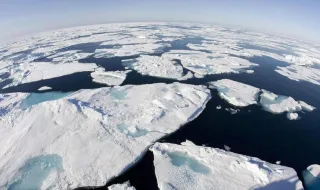
Traditional communities in Pakistan are turning to an ancient indigenous practice called "glacier grafting" to face the growing water scarcity in the country. This millennia-old technique involves manipulating glaciers to increase the production of meltwater during the warmer months.

The practice is known as "glacier marriage" and involves local communities working with glaciers in a traditional and sustainable way. The main objective is to guarantee access to drinking water for consumption and agriculture in regions where water resources are becoming increasingly scarce.

Pakistan faces a significant water crisis, with accelerated glacier melting due to climate change. Millions of people depend on water from the melting of these ice masses to survive, especially in rural and mountainous areas of the country.

The communities involved in this practice highlight the importance of contributing to nature through traditional methods. This approach represents an attempt to adapt ancestral techniques to contemporary climate change challenges, showing how indigenous knowledge can be valuable in the search for solutions to current environmental problems.
Related articles

Science

Weight loss pens can even change your relationship with perfumes? Understanding the phenomenon

Weight loss pens, such as Ozempic and Wegovy, are increasingly present on social media, with patients and influencers sharing experiences. In addition to reduced hunger and loss of interest in certain foods, a curious side effect has been reported: perfumes that were previously pleasant, especially sweeter or more pronounced ones, now cause discomfort. Some people also report increased sensitivity to the smell of certain foods and changes in the perception of flavors and aromas. Experts are still studying the phenomenon.

oglobo03/09/26, 07:31
Science

Has the scale lost its starring role? Why muscles have taken the stage

On social media, weight loss is no longer measured solely by the number on the scale, now also considering the preservation of muscle mass. Celebrities, influencers, and health professionals are increasingly attentive to what happens to the body during weight loss, especially given the popularization of medications for treating obesity. The concern goes beyond aesthetics, since musculature is related to strength, mobility, and the ability to perform daily activities, gaining even more importance with aging. Endocrinologist Patricia Gracitelli highlights that this broader view is essential to assess the quality of a weight loss process.

oglobo03/09/26, 07:00
El derretimiento de la Antártida está lanzando al océano cada año 6,5 toneladas de mercurio, peligroso contaminante
Science

Antarctica's melting is releasing 6.5 tons of mercury into the ocean each year, a dangerous pollutant

The melting of Antarctica is releasing approximately 6.5 tons of mercury per year into the ocean, one of the most dangerous pollutants on the planet, according to a recently published study. The release of mercury from glaciers on the Antarctic Peninsula has increased by 550% since the pre-industrial era, due to global warming that accelerates the release of this heavy metal that had been trapped for millennia in the ice. Researchers warn that pollutants accumulated in high-altitude mountain ranges could also end up flowing into water courses as glaciers melt and permafrost thaws.

El Periódico Mediterráneo - General03/09/26, 06:55
Science

"Social jet lag": misaligned sleep schedules increase anxiety in adolescents

A new study revealed that adolescents who maintain irregular sleep schedules between the week and the weekend, a phenomenon known as "social jet lag", may have a higher probability of suffering from anxiety. The difference between sleep and wake times during the week and weekend disrupts young people's biological clock, increasing the risk of mental health problems.

Euronews Portugal03/09/26, 06:16