This is how roasted onions are prepared in space
Science
Космос

This is how roasted onions are prepared in space

Sábado1 September 2026 at 16:14

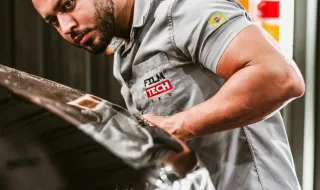
NASA published a video showing astronauts preparing roasted onions aboard the International Space Station. Astronauts Jessica Meir and Jack Hathaway were responsible for demonstrating this preparation. The station only has a food warmer, so the cooking process can take between 12 and 24 hours. The video was published on Tuesday.

Related articles

Nace en Italia la decimoquinta cría de la hipopótama más longeva de Europa
Science

The fifteenth calf of Europe's longest-living hippo is born in Italy

The longest-living common hippo female in Europe, named 'Camilla', gave birth to her fifteenth calf at almost 55 years of age, a record for the species, at the Natura Viva park in Bussolengo, near Verona, in northern Italy. The mother, who weighs 2,500 kilos, and the calf, with 50 kilos, live together with their group and with a nyala antelope herd at the park.

El Periódico Mediterráneo - General01/09/26, 18:51
Science

Discover the German technology that helps NASA find new invisible worlds

NASA's Nancy Grace Roman Space Telescope, launched on August 30, 2026, features essential technology developed in Heidelberg, Germany, which will reveal worlds previously hidden in the universe. The telescope, currently on a three-month journey to the L2 Lagrange point, has two main scientific instruments: an infrared camera to capture vast regions of the sky and a specialized coronagraph to search for hidden planets. The German contribution, from the Max Planck Institute for Astronomy, will be fundamental for the investigations the telescope will carry out from its position 1.6 million kilometers from Earth.

Meteored Portugal01/09/26, 18:09
¿Puede una máquina ser consciente? La biología busca la respuesta
Science

Can a machine be conscious? Biology seeks the answer

The article addresses the fundamental question of whether a machine can be conscious. Although artificial intelligence is increasingly able to imitate human capabilities, the question remains whether it will ever be able to experience the world subjectively. A new study proposes a different approach: instead of asking whether current AIs are conscious, it suggests examining what the biological brain can teach about the possibilities of future artificial consciousness.

El Periódico Mediterráneo - General01/09/26, 17:58
Science

Particles pass through our body every second and a team from Coimbra managed to detect them

A team of researchers from the University of Coimbra managed to detect neutrinos, subatomic particles that pass through the human body and planet Earth by the thousands of millions every second, without being perceptible by human senses. This achievement represents an important milestone for Portuguese physics and for understanding the mysteries of the universe, allowing the study of these practically invisible particles that constantly pass through us.

Notícias de Coimbra01/09/26, 17:51