How to Save VRAM When Running AI Models Locally Without Switching GPUsPhoto by Adriano Ponte Abreu on Pexels
Technology
Искусственный интеллект

How to Save VRAM When Running AI Models Locally Without Switching GPUs

Notícias Portugal31 August 2026 at 12:17

Running artificial intelligence models on personal computers has become more accessible, but video memory (VRAM) still imposes considerable limits on users. Strategies such as quantization, FlashAttention, KV cache optimization, and CPU offloading offer ways to maximize the use of an existing GPU, although there are no universal rules. A 13-billion parameter model does not necessarily require the same amount of memory every time, and reducing layers does not guarantee maintaining model quality.

With the popularization of open-source models and tools like llama.cpp, Ollama, and vLLM, the possibility of running language models without depending on external APIs has expanded. However, many users still face challenges when trying to operate models that exceed the GPU's memory capacity before even generating the first token.

Quantization has proven to be one of the most effective techniques for running large models on systems with limited resources, reducing memory consumption by storing weights using fewer bits. Alternatives like GPTQ and AWQ offer different degrees of quantization, but reducing precision can lead to quality loss depending on the task. Additionally, the context length a model maintains in its KV cache also significantly impacts VRAM consumption, and optimizations like FlashAttention can help reduce this consumption.

With 8 GB GPUs, many small and medium models can be run efficiently, while configurations of 12 or 16 GB allow greater flexibility. True optimization goes beyond the number of parameters or available VRAM, involving the model architecture, operating mode, and overall system efficiency. In corporate environments, inference infrastructure must consider VRAM, CPU, data flow, and energy consumption to ensure optimal performance.
Related articles

Huawei não consegue parar de revelar detalhes do Mate XT 2
Technology

Huawei cannot stop revealing Mate XT 2 details

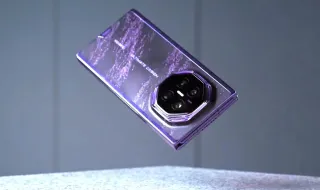
Huawei continues to anticipate the official presentation of the Mate XT 2, revealing details of the triple-fold smartphone before the date set for September 7. The company intensifies communication about what will be the next generation of its innovative triple-screen device.

SAPO Notícias31/08/26, 22:33
Há pessoas a filmar cada movimento do seu dia. Tudo para ensinar robôs a agir como humanos
Technology

Thousands of people are filming every movement of your day. All to teach robots to act like humans

Thousands of people in India are recording videos of their daily activities, from cooking to folding clothes, to provide training data to companies developing humanoid robots. This unusual practice is part of the data collection process for artificial intelligence, allowing machines to learn to perform domestic tasks and other human activities with greater precision and naturalness.

SAPO Notícias31/08/26, 22:09
Path Traversal: o que é esta vulnerabilidade e como pode colocar dados em risco?
Technology

Path Traversal: what is this vulnerability and how can it put data at risk?

The article explains what the Path Traversal vulnerability is, a security flaw that, although it seems simple, can allow attackers to access files that should be protected in a system. The vulnerability exploits flaws in the way applications process file paths, allowing attackers to manipulate these paths to access files outside the authorized directories.

SAPO Notícias31/08/26, 21:30
Galaxy Z Fold8 Ultra chumba em teste de resistência. Veja o vídeo
Technology

Galaxy Z Fold8 Ultra undergoes durability test. See the video

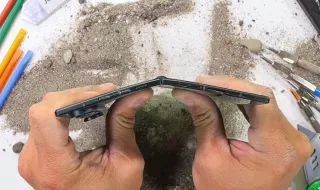
After the Galaxy Z Fold8 survived the durability test by the JerryRigEverything YouTube channel, it was the turn of the Galaxy Z Fold8 Ultra to undergo the same test. The video shows how the Ultra version performs in terms of scratch, heat, and bend resistance, following the same rigorous protocol applied to the standard model.

SAPO Notícias31/08/26, 21:01