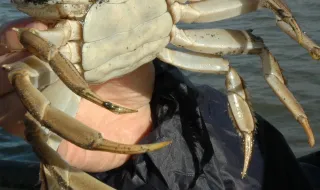
Italy is testing an unusual strategy to combat the blue crab, an invasive species that has caused significant damage to fishing and aquaculture in the Adriatic Sea. As part of the Octo-Blu project, researchers released approximately 130,000 paralarvae of the common octopus (Octopus vulgaris) off the coast of Cesenatico and Riccione, in the Emilia-Romagna region. The project is developed by the University of Bologna, with the support of the Emilia-Romagna Region, and began in 2024. The researchers study both the biology of the blue crab and ways to reproduce and cultivate octopuses in the laboratory. The blue crab (Callinectes sapidus) is native to the Atlantic coast of North America and arrived in the Adriatic through ship ballast water, proliferating uncontrolled in recent years. This voracious species feeds on mollusks, fish, and crustaceans, causing high economic damage to fishermen and aquaculturists in the region. The Octo-Blu project aims to assess whether the introduction of the octopus can help control the blue crab population, using the octopus as a natural predator of the invasive species.

ScienceSetúbal
Italy released 130,000 baby octopuses to stop a crab invasion
ZAP Notícias29 August 2026 at 21:30
Related articles

Science
Square breathing: how one of the most powerful 'tricks' to control stress works
29/08/26, 22:25