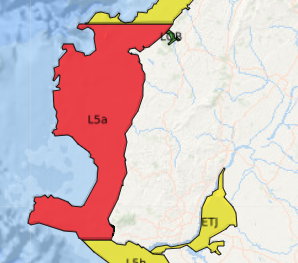
A communication was issued regarding the prohibition of harvesting and commercialization of bivalve mollusks, echinoderms, tunicates, and marine gastropods in Portugal, due to the presence of toxins and other reasons. This information was updated on August 28, 2026, referring to zone L5a Litoral Peniche – Cabo Raso.
In the area covered by the notice, the limpet and mussel have been prohibited. The limpet is prohibited due to the presence of chemical contaminants, specifically cadmium, while the mussel is prohibited due to lipophilic biotoxins that cause diarrhetic shellfish poisoning (DSP). The sea urchin remains open for harvesting in this area.
The Portuguese Institute for the Sea and Atmosphere (IPMA) provides a bulletin with all prohibitions in force, as well as an information platform on the concentration of harmful phytoplankton. The article also includes information on alert thresholds for harmful phytoplankton and sanitary classification classes based on E. coli levels.
Comunicado
Apanha e captura de moluscos bivalves — Zonas interditas
Interdição da apanha e comercialização de bivalves, equinodermes, tunicados e gastrópodes marinhos em Portugal e/ou zonas reclassificadas temporariamente devido à presença de toxinas/outros motivos.
Data de atualização: 2026-08-28
L5a Litoral Peniche – Cabo Raso
Lapa – Interdita
Contaminantes Químicos: Cádmio
Estatuto Sanitário: NA
Mexilhão – Interdita
Biotoxinas: lipofílicas (provocam DSP)
Estatuto Sanitário: B*
Ouriço-do-mar – Aberta
Estatuto Sanitário: NA
–
Consulte (aqui) todas as interdições.
Alerta de Fitoplâncton Nocivo.
Ver Plataforma informativa da distribuição da concentração de Fitoplâncton Nocivo (http://www.ipma.pt/pt/bivalves/fito/index-map-dia-chart.jsp), para mais informações, consultar os Limites de alerta para o Fitoplâncton Nocivo (http://www.ipma.pt/bin/docs/publicacoes/pescas.mar/tabela-112017-fitoplancton_zdp.pdf).
Observações:
Classe A >230 e <= 700 E. coli (NMP/100 g)
Classe B >4600 e <=46000 E. coli (NMP/100 g)
− NA – Não Aplicável. Segundo o Regulamento (UE) N.o 558/2010, os gastrópodes marinhos não filtradores (exemplo: lapas), estão excluídos das disposições relativas à classificação de zonas de produção estabelecidas no capítulo II da secção VII do anexo III do Regulamento (CE) N.o 853/2004.
− * — ”Classificações provisórias”. Correspondem a classificações baseadas num número limitado de amostras
Bivalve
O IPMA refere que o termo molusco bivalve designa o animal de corpo mole protegido por um exoesqueleto com forma de uma concha de duas valvas, que se articulam por uma charneira sendo mantidas unidas pelos músculos adutores. Nos bivalves, contrariamente aos outros moluscos, não é possível distinguir a cabeça. 0 corpo é constituído essencialmente por um pé e uma série de lâminas branquiais (ctnedia) podendo, ou não, existir um par de sifões 0 manto tem a forma de duas abas simétricas que recobrem o corpo do animal e segregam as valvas. Estas podem ser firmemente fechadas por retração dos músculos adutores, situados em cada uma das extremidades do animal. Os bivalves não possuem um sistema muscular que permita a abertura das valvas. Em vez disso, possuem um ligamento elástico que automaticamente abre a concha quando o músculo adutor relaxa. Ao longo da charneira existe uma espécie de cremalheira que mantém as valvas da concha no lugar e evita que se desloquem para trás ou para a frente.