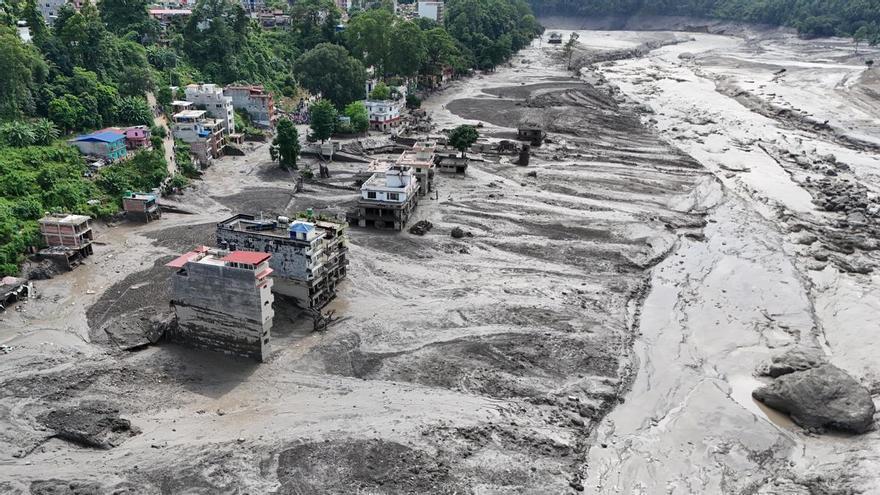
Nepal faces a significant increase in natural disasters driven by global warming, serving as an example of the consequences of climate change in mountainous regions. The country has recorded more avalanches, landslides, and floods in recent years, events that are becoming more frequent and intense due to rising global temperatures.
A devastating flood on the border between Nepal and Tibet left at least 350 dead. The catastrophe was likely caused by a glacier collapse, specifically a so-called "Glacial Lake Outburst Flood" (GLOF), when a glacial pond bursts suddenly.
The Himalayan glaciers are particularly vulnerable to global warming. Accelerated melting forms unstable glacial lakes that, when they burst, release large volumes of water and debris, causing catastrophic floods in the valleys below.
This event highlights the urgent need for adaptation and mitigation strategies for vulnerable communities in high mountain regions, where entire populations live under the constant threat of climate-related disasters.