Portugal already has 231 identified non-indigenous marine speciesPhoto by Mo Eid on Pexels
ScienceAçoresMadeira

Portugal already has 231 identified non-indigenous marine species

Braga TV28 August 2026 at 14:47

This article is about the inventory of non-indigenous marine species in Portugal, where 231 species were identified in the mainland territory and in the Azores and Madeira archipelagos.

The scientific study was published in the journal Marine Pollution Bulletin and represents the most comprehensive update of this inventory since 2015, bringing together researchers from various Portuguese institutions.

Non-indigenous marine species refer to those that are not native to Portuguese waters, meaning organisms that were introduced in some way (for example, through ballast water, naval fouling, or other pathways) and that are now part of the local marine biodiversity.

Related articles

Science

Portuguese waters have 231 invasive species: five had never been recorded before

A new study identified 231 non-indigenous marine species in Portuguese waters, including five that had never been previously recorded. The research alerts to the impact of these invasive species on local marine biodiversity and Portugal's coastal ecosystems.

Notícias de Coimbra28/08/26, 19:56
Science

Rare case: Woman gives birth to twins from different fathers

A 27-year-old Australian woman gave birth to twins with different biological fathers in a case considered rare and unprecedented in Australia. The phenomenon, known as heteropaternal superfecundation, occurs when a woman releases two eggs during the same menstrual cycle and these are fertilized by sperm from different men during separate acts of intercourse. The case became public after Brisbane's Mater Hospital revealed the discovery occurred during routine paternity tests.

Notícias de Coimbra28/08/26, 19:32
Science

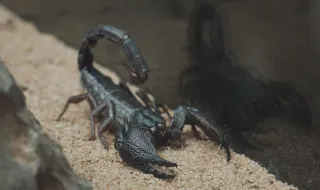
What species is this: scorpion

Reader Carolyn Brown photographed a scorpion found on her table in Águas, Penamacor, and asked for its identification. Expert Pedro Sousa identified it as belonging to the genus Buthus, most likely the species Buthus halius. The article explains that this is a common species in Portugal, especially in warm and dry areas, with nocturnal habits and not very dangerous to humans, although its sting is painful, requiring special care with young children, elderly people, or those with weakened health.

Wilder28/08/26, 19:17
Science

MARE releases study on invasive species in Portuguese waters; 62 confirmed in RAM waters

MARE – Marine and Environmental Sciences Centre revealed a study published in the scientific journal Marine Pollution Bulletin, led by researchers from MARE and ARNET – Aquatic Research Network, which updates to 231 the number of invasive species in Portuguese waters, with 62 confirmed in the waters of the Autonomous Region of Madeira. This work represents the most complete compilation ever carried out on the topic.

Funchal Notícias28/08/26, 18:58