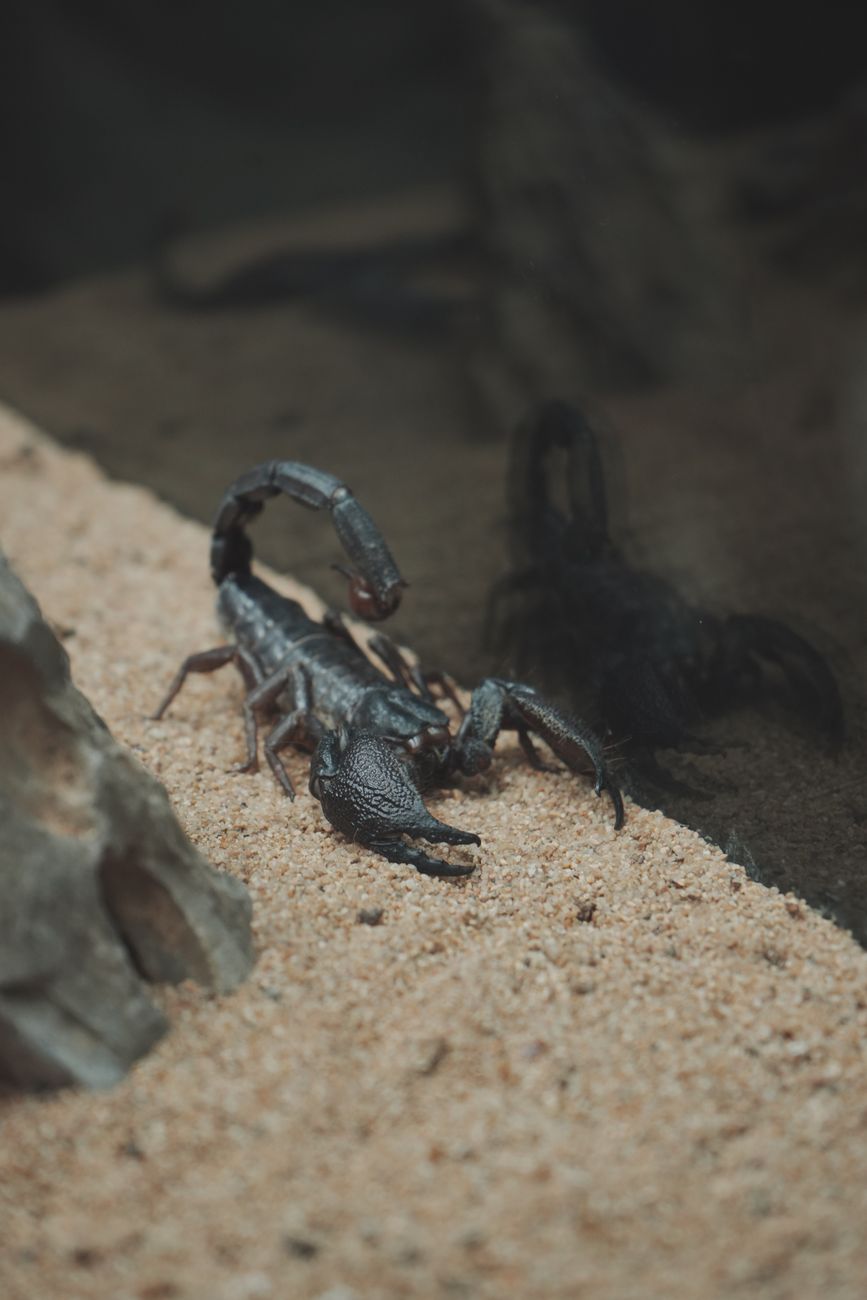
Reader Carolyn Brown photographed the scorpion on 23 August in Águas, Penamacor, when the animal was on her dining table at home. The reader's seven-year-old daughter ended up being stung by the scorpion, which measured approximately two centimetres including the tail.
The species identification was made by Pedro Sousa, a biologist with extensive experience in identifying spiders and scorpions in Portugal and specialist of the IUCN SSC Spider and Scorpion Specialist Group. According to the expert, this is a scorpion of the genus Buthus, with Buthus halius being the most likely species.
The scorpion, known in Portugal as lacrau or alacrau, can be found throughout almost the entire country, being especially common in the warmer and drier areas. As they are nocturnal animals and their colouring camouflages them with the surrounding environment, they almost always go unnoticed.
Regarding the dangerousness of the sting, which normally causes intense pain, Pedro Sousa states that, in principle, there will only be a problem for people who show allergy to the venom components, young children, elderly people, or those with weakened health. Nevertheless, the sting site should be examined by a doctor.
A leitora Carolyn Brown fotografou este escorpião a 23 de agosto em Águas, Penamacor, e pediu para saber a espécie. Pedro Sousa responde.
“This tiny scorpion was on our dining table tonight (23/8/26). My 7 year old daughter got stung by it. It was approx 2cm including the tail. Our location is Aguas, Penamacor, 6090-048”, escreveu a leitora à Wilder.
Trata-se de um escorpião pertencente ao género Buthus.
Espécie identificada e texto por: Pedro Sousa, biólogo com vasta experiência na identificação de espécies de aranhas autóctones de Portugal e especialista do grupo Aranhas e Escorpiões da IUCN SSC.
Este é um escorpião do género Buthus. Buthus halius deverá estar correcto.
Em relação à perigosidade da picada, que é dolorosa, em princípio só haverá problema em pessoas que revelem alergia aos componentes do veneno. Mas também é preciso ter sempre atenção com crianças pequenas, pessoas idosas ou com saúde debilitada.
O escorpião é também conhecido pelos nomes comuns de lacrau ou alacrau. “Pode ser encontrado em quase todo o país e é especialmente comum nas zonas mais quentes e secas”, explicou Pedro Sousa, numa identificação já anteriormente publicada. “Mas como só são activos à noite e a sua coloração os confunde bastante com o ambiente circundante passam quase sempre despercebidos.”
Os escorpiões têm hábitos nocturnos e conseguem sobreviver durante muito tempo sem alimentos e água. Usam o veneno apenas para se defender ou para caçar presas maiores do que eles, devido ao desgaste de energia que isso representa. Alimentam-se de vários insectos e outros invertebrados e são por isso parte importante dos ecossistemas terrestres onde existem.
É uma espécie pouco perigosa para os humanos. Ainda assim, convém ter algum cuidado, poius se se sentir ameaçado um escorpião pode picar pessoas, o que causa normalmente uma dor intensa. O local da picada deverá ser observado por um médico.
Agora é a sua vez.
Encontrou um animal ou planta que não sabe a que espécie pertence? Envie para o nosso email a fotografia, a data e o local. Trabalhamos com uma equipa de especialistas que o vão ajudar.
Explore a série “Que espécie é esta?” e descubra quais as espécies que já foram identificadas, com a ajuda dos especialistas.
Joana Amaral Dias commented on the Lindsay Clancy case, expressing deep empathy for the children involved, and explained the medical and psychiatric complexity associated with postpartum psychosis episodes, using historical and recent cases in Portugal to illustrate the severity and particularities of this condition.
A new study identified 231 non-indigenous marine species in Portuguese waters, including five that had never been previously recorded. The research alerts to the impact of these invasive species on local marine biodiversity and Portugal's coastal ecosystems.
A 27-year-old Australian woman gave birth to twins with different biological fathers in a case considered rare and unprecedented in Australia. The phenomenon, known as heteropaternal superfecundation, occurs when a woman releases two eggs during the same menstrual cycle and these are fertilized by sperm from different men during separate acts of intercourse. The case became public after Brisbane's Mater Hospital revealed the discovery occurred during routine paternity tests.
MARE – Marine and Environmental Sciences Centre revealed a study published in the scientific journal Marine Pollution Bulletin, led by researchers from MARE and ARNET – Aquatic Research Network, which updates to 231 the number of invasive species in Portuguese waters, with 62 confirmed in the waters of the Autonomous Region of Madeira. This work represents the most complete compilation ever carried out on the topic.