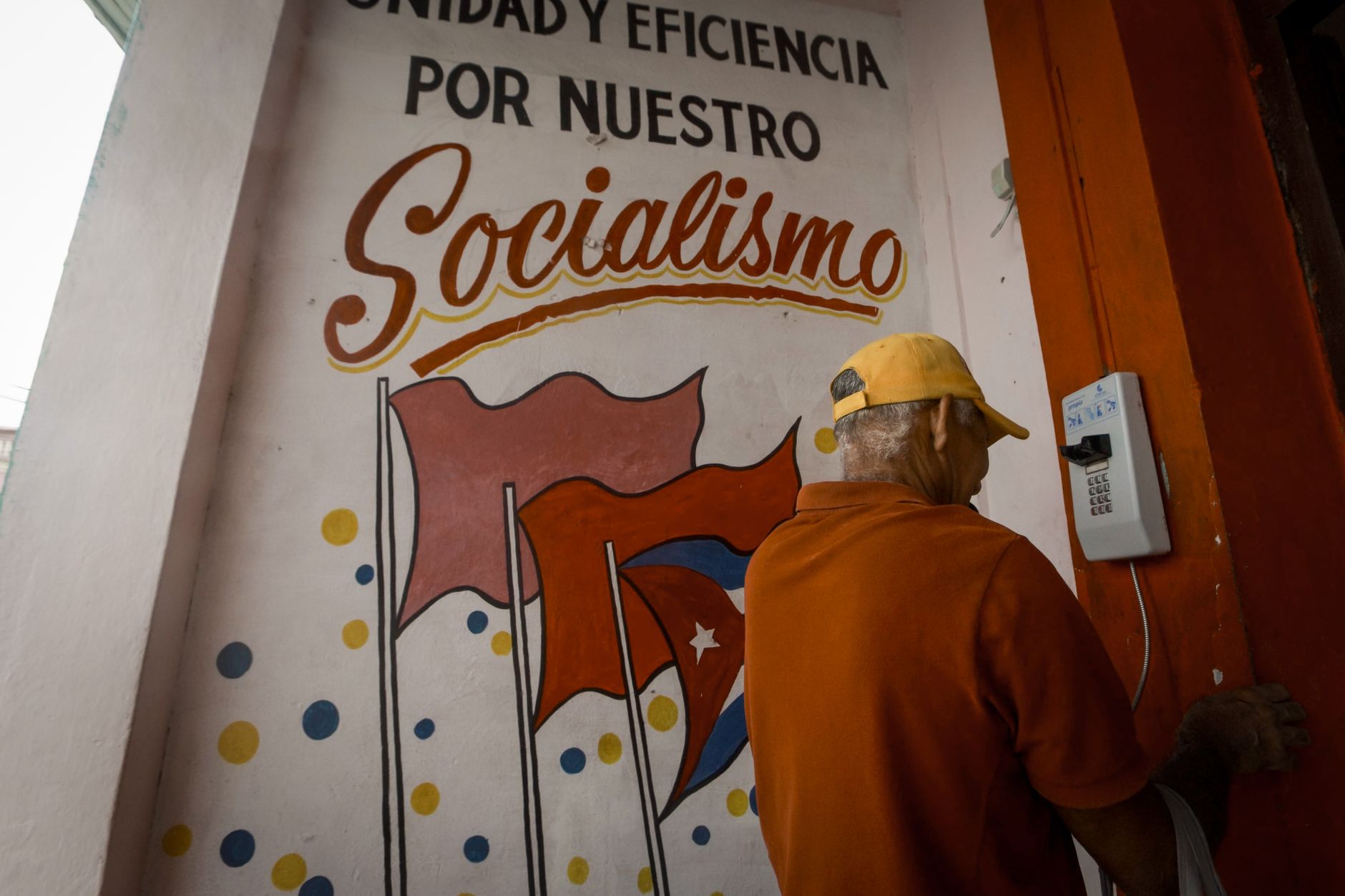
1959 – Cuba between the social revolution and the cost of repressionPhoto by Mehmet Turgut Kirkgoz on Pexels
Politics

1959 – Cuba between the social revolution and the cost of repression

Funchal Notícias28 August 2026 at 02:02

The Cuban revolution of 1959 marked a profound turning point in the history of the island and continues, more than six decades later, to divide interpretations. For some, it represented the promise of social justice, access to education, and greater equality in a country still marked by strong inequalities. For others, it opened the way to an authoritarian political system, repression, and the limitation of individual freedoms.

The article notes that defenders of the revolution highlight achievements such as the reduction of illiteracy, universal access to health, and the reduction of social inequalities. However, critics point to the consequences of the regime that followed, including political repression, lack of freedom of expression, and the economic challenges the country faced over the decades.

The text suggests that the legacy of the 1959 revolution continues to be the subject of intense debate, both in Cuba and internationally, reflecting the complex political, social, and human dimensions of a historical process that profoundly shaped Latin America and international relations during the Cold War.
Related articles

Politics

TIRED of politicians

A tired public servant expresses frustration with the government, criticizing the lack of funds for essential services such as the ferry while investing in golf courses for private friends. She also denounces inequalities in the SIADAP evaluation system, where scores are often given in a biased manner, and the inconsistent application of bonuses provided by law among different regional secretariats, concluding that there is no equality among public servants.

Madeira Opina28/08/26, 02:42
Politics

In interview, Lula says son must pay if he committed 'illegal acts' and that he wants to 'reclaim territory' from crime

In an interview on the National Journal, President and re-election candidate Lula commented on the Federal Police investigations involving his son Fábio Luís Lula da Silva, known as Lulinha, and his former chief of staff Marco Aurélio Santana, known as Marcola. Lula stated that his son has an obligation not to have made mistakes and must pay if he committed illegal acts, but classified the accusations as "inferences," highlighting that there is no evidence against him, only phone conversations. The president also defended Marcola, stating that their relationship was "almost like father and son."

cbn28/08/26, 02:25
Politics

Lula on TV Globo: how did the president do in the interview? See the grades and assessments from GLOBO's columnists

TV Globo conducted a series of daily interviews with presidential candidates, and on Thursday it was the turn of President Luiz Inácio Lula da Silva (PT), questioned by journalists Renata Vasconcellos and César Tralli. GLOBO's columnists evaluated the incumbent's performance as "firm," "with ease," and "exalted" at times, giving him an average grade of 3 on a scale of 1 to 5.

oglobo28/08/26, 02:20
Politics

Lula speaks about his proposals on Globo: what the presidential candidate said in the interview with the network

President and candidate for re-election Lula gave an interview to Globo where he talked about various topics of current political interest, including the accusations involving his son Lulinha, the Banco Master case and the trajectory of Brazilian public debt, presenting his proposals for a possible new term.

BBC News Brasil28/08/26, 02:16