Janja will have a central role in Lula's strategy to expand support among evangelical women
cbn26 August 2026 at 22:03
Lula's campaign for reelection is betting on first lady Janja da Silva to expand dialogue with evangelical women and win new votes in this segment. According to campaign sources heard by CBN, Janja will play a fundamental role in this approach. The PT's internal assessment is that, because Lula is openly Catholic and Janja does not follow any specific religion, she would have a greater capacity to establish dialogue with this audience. The movement took shape with a video of Janja calling on voters to participate in evangelical committees, which will be set up in states to gather supporters. The guidance is that Janja make a round of dialogues across the country to listen to evangelical women, more than present proposals.
Analyst Uriã Pancelli commented on the NOW program about the polling data conducted in the regions of Rio de Janeiro, São Paulo, and Minas Gerais, highlighting that Brazil’s socioeconomic and geographic differences pose significant challenges for the development and effectiveness of political speeches, since the distinct realities of each region require differentiated approaches from the candidates.
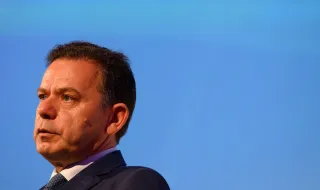
Montenegro's prime minister reiterated the commitment not to make changes to Social Security during the current legislative term, advocating instead for the need to reach a "national understanding" on system reforms before the next elections, in order to guarantee stability and political consensus for any future changes.
The Portuguese Government recognized as a natural disaster the rural fires that affected the municipalities of Vouzela and Valpaços between July and August, allocating ten million euros to support the affected agricultural holdings. The fires caused significant damage to crops such as chestnut trees, olive groves and vineyards, compromising the productive potential essential for the local economy. The support, in the form of a non-reimbursable grant, aims to restore the productive potential of holdings with damage exceeding 30%, with 100% funding for the first 10,000 euros of eligible expenditure.
Prime Minister Luís Montenegro defended the need to reach a "national understanding" about the future of Social Security before the next legislative elections, warning that solutions and funding sources will need to be negotiated among political parties to guarantee the system's sustainability. Montenegro acknowledged that the topic requires cross-party consensus and that the country needs structural responses to the demographic and financial challenges that threaten Social Security's viability.